
How to Protect Yourself in a Car Accident
If you see brake lights flash ahead and a collision is unavoidable, what is your first physical instinct? Understanding how to position your body and brace during those brief seconds can significantly lower your risk of serious injury. When an impact is imminent, split-second decisions dictate how crash forces travel through your skeletal system and soft tissue. Learning how to protect yourself in a car accident involves more than simply holding on tight.
Taking an accident prevention course can help you spot hazards early and steer clear of danger, but understanding how physical bracing protects your body gives you practical protection if a collision cannot be avoided. While nobody wants to dwell on collisions while driving home on the freeway or handling a busy intersection, we are exploring the topic so you can feel calm, prepared, and confident on the road.
Does bracing for impact protect you in a crash?
Bracing for impact during an unavoidable car crash significantly reduces the risk of severe bodily harm. Tensing your muscles creates a natural barrier that shields internal organs, while keeping your spine straight prevents ligaments, spinal discs and nerves from bearing the full force of the collision.
An old driving myth suggests that staying completely limp during an accident reduces physical harm. The logic behind this misconception assumed that relaxed joints flex naturally under impact. Clinical trauma research demonstrates the opposite reality. When an occupant stays relaxed during a collision, the sudden shock load bypasses the musculature and transfers straight into bone structures and spinal discs.
A study published by the National Center for Biotechnology Information examined how occupant awareness affects collision trauma. Researchers discovered that vehicle occupants who saw a collision coming and prepared their bodies for impact experienced less overall tissue damage and achieved better long-term recoveries. Contracting your skeletal muscles absorbs kinetic energy before that force can damage deep spinal structures.
Tensing your body also provides an internal shield for your torso. When you brace your abdominal wall and core muscles, you firm up the entire midsection. This natural muscular tension holds internal organs firmly in place, reducing the likelihood of internal tears or bruising caused by violent movement.
How should you position your body during a collision?
If you have time to react, position your body by squaring your back flat against the seatback and pressing your head firmly into the headrest. Looking straight ahead while eliminating the physical gap between your skull and the cushion minimizes cervical spine strain and dramatically reduces the risk of severe whiplash injuries.
The human neck is vulnerable to extreme torque when struck from behind or at an angle. If you notice a vehicle barreling toward you while stopped in traffic in Surrey, your natural curiosity might tempt you to turn your head and watch through the rearview mirror. Turning your head twists the cervical vertebrae. If an impact occurs while your neck is rotated, the crash force concentrates on one side of the spine, tearing muscles and damaging spinal joints.
Square your shoulders and press your back flat against the seatback. Plant your head straight back into the cushion of the headrest and look directly forward. This posture aligns your vertebrae in a neutral orientation designed to distribute impact forces evenly across your back and ribcage.
Closing the distance between your head and the headrest is equally important to prevent car crash injuries. Whiplash happens when your torso moves forward with the seat while your head lags behind, followed by a violent forward rebound. When your head is already pressed firmly against the headrest, your skull cannot whip backward, preventing extreme neck hyperextension.
How should you hold the steering wheel to avoid wrist injuries?
Hold the steering wheel firmly from the outside rim using the 9-and-3 hand position. Avoid hooking fingers through the spokes or steer with your hands inside the rim, because a deploying airbag will force the wheel to spin and could break your wrists or forearms.
The way you grip the steering wheel during regular daily driving makes a difference during an emergency. Many motorists develop careless steering habits over time, such as palming the wheel or hooking fingers under the inside rim while executing turns. If a sudden crash triggers an airbag deployment, an inside grip traps your arms in the line of fire.
Modern driver airbags deploy at speeds exceeding 300 km/h in less than 40 milliseconds. The explosive force from the steering column module pushes outward violently. If your hands or wrists are hooked inside the wheel rim, the airbag could fling your arms backward against the windshield or snap your forearm bones. Keeping your hands wrapped firmly around the outside edge of the wheel allows the airbag cover to blow open unobstructed.
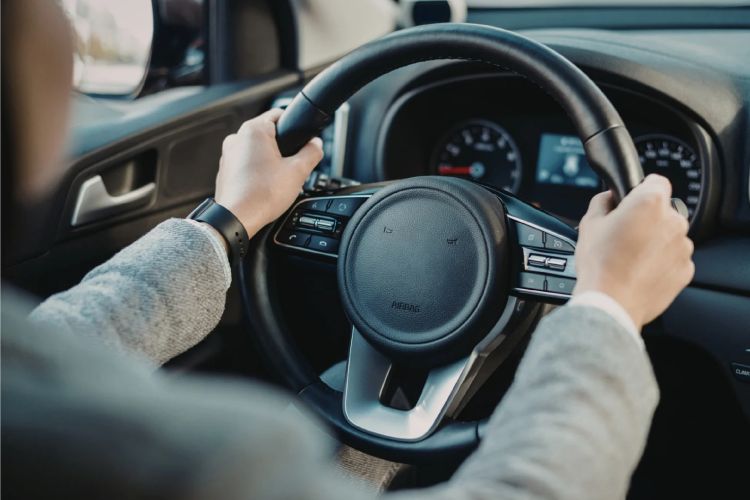
We teach drivers to maintain the 9-and-3 hand position on the outside rim of the wheel. This placement provides solid leverage for evasive steering while keeping your thumbs pointed along the outer contour of the wheel rather than hooked inside. For new drivers working through their Class 7 learner stage, establishing this hand placement early on creates reliable muscle memory that protects hands and wrists under possible future stress.
How does proper seat and headrest alignment prevent injury?
Proper seat and headrest alignment protects your spine by positioning the top of the headrest level with the top of your head and maintaining at least 25 centimeters of clearance from the steering wheel. An upright seatback keeps the three-point seatbelt properly positioned across your hips and chest.
Driver seat position safety starts long before you turn the ignition key.
- Begin by setting your headrest height. The center of the headrest cushion should line up with the top of your ears, and the overall top edge should sit level with the top of your head. If the headrest sits too low near your neck, it acts as a pivot point during a rear-end collision, bending your neck backward over the plastic frame and causing severe spinal strain.
- Next, check your distance from the steering wheel. Slide your seat back so there is at least 25 centimeters (about 10 inches) between the center of your breastbone and the steering wheel hub. This distance allows the driver airbag enough room to inflate fully before cushioning your torso. Keep your seatback reasonably upright. Reclining too far back causes the lap belt to ride up over your soft abdominal organs rather than resting across your solid pelvic bones, which creates a dangerous risk of sliding beneath the belt during sudden deceleration.
If you have trouble adjusting your vehicle to meet your body’s needs, it may be time to consider driving a different vehicle or investing in some aftermarket accessories like seat sliders or height adjusters. When adding aftermarket accessories, just make sure they don’t interfere with built-in safety systems. While driving through busy corridors like 200th Street in Langley, having your seat correctly adjusted ensures you can reach vehicle controls comfortably while remaining protected by your restraint systems.
How can passengers help maintain a safe cabin?
Resting your feet on the dashboard or tucking the shoulder belt under an arm dramatically increases collision injuries. Because passenger airbags deploy upward and backward at high velocity, improper seating posture can throw legs into the chest and cause severe hip or pelvic fractures.
Passengers frequently introduce unnecessary hazards into the vehicle cabin by relaxing in improper positions during long road trips. One of the most severe hazards is placing feet up on the dashboard. The passenger airbag is housed directly beneath the dashboard surface. When triggered during an accident, the airbag module violently pushes whatever is resting on top of it.
If an airbag deploys while someone has their feet on the dash, the force throws the passenger’s knees directly into their chest at highway speeds. This scenario can cause significant hip, leg, and facial injuries, so feet should remain flat on the vehicle floorboard throughout the entire trip.
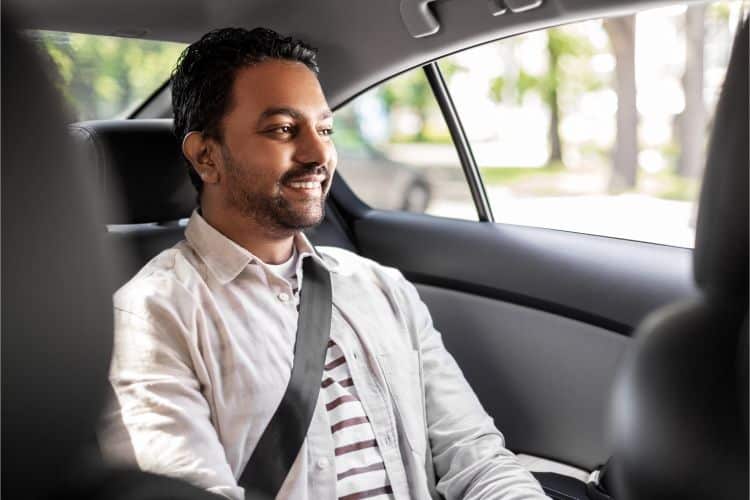
Seatbelt position matters just as much. Ensure passengers avoid collarbone friction by keeping the diagonal shoulder belt securely over the collarbone and sternum, rather than slipping it behind their back or tucking it under their arm. Carrying passengers safely is also a mandatory legal requirement for commercial operators holding a Class 4 licence, where drivers are responsible for ensuring that shuttle or passenger van occupants maintain upright posture and buckle up correctly before the vehicle moves. Adhering to these basic airbag safety precautions keeps everyone inside the cabin secure.
Learning how to brace properly and keeping your body flat against the seat provide physical protection if an accident happens. Combining these defensive seating techniques with regular vehicle checks and attentive driving habits ensures you are prepared for sudden road hazards on busy highways like in Burnaby.
How can you avoid collisions before bracing becomes necessary?
Avoiding collisions through space management and diligent observation reduces the likelihood of accidents or collisions. Maintaining an adequate following distance provides the physical space required to stop safely, and constant visual scanning allows you to spot trouble early and take evasive action.
The best way to protect your body in a crash is to avoid having one altogether. Identifying road risks early and learning how to avoid common causes of car accidents ensures physical bracing remains strictly a last-line measure, and proactive space management forms the foundation of that defence. Leaving a large cushion of space in front of your vehicle gives you time to react when traffic suddenly halts on the highway.
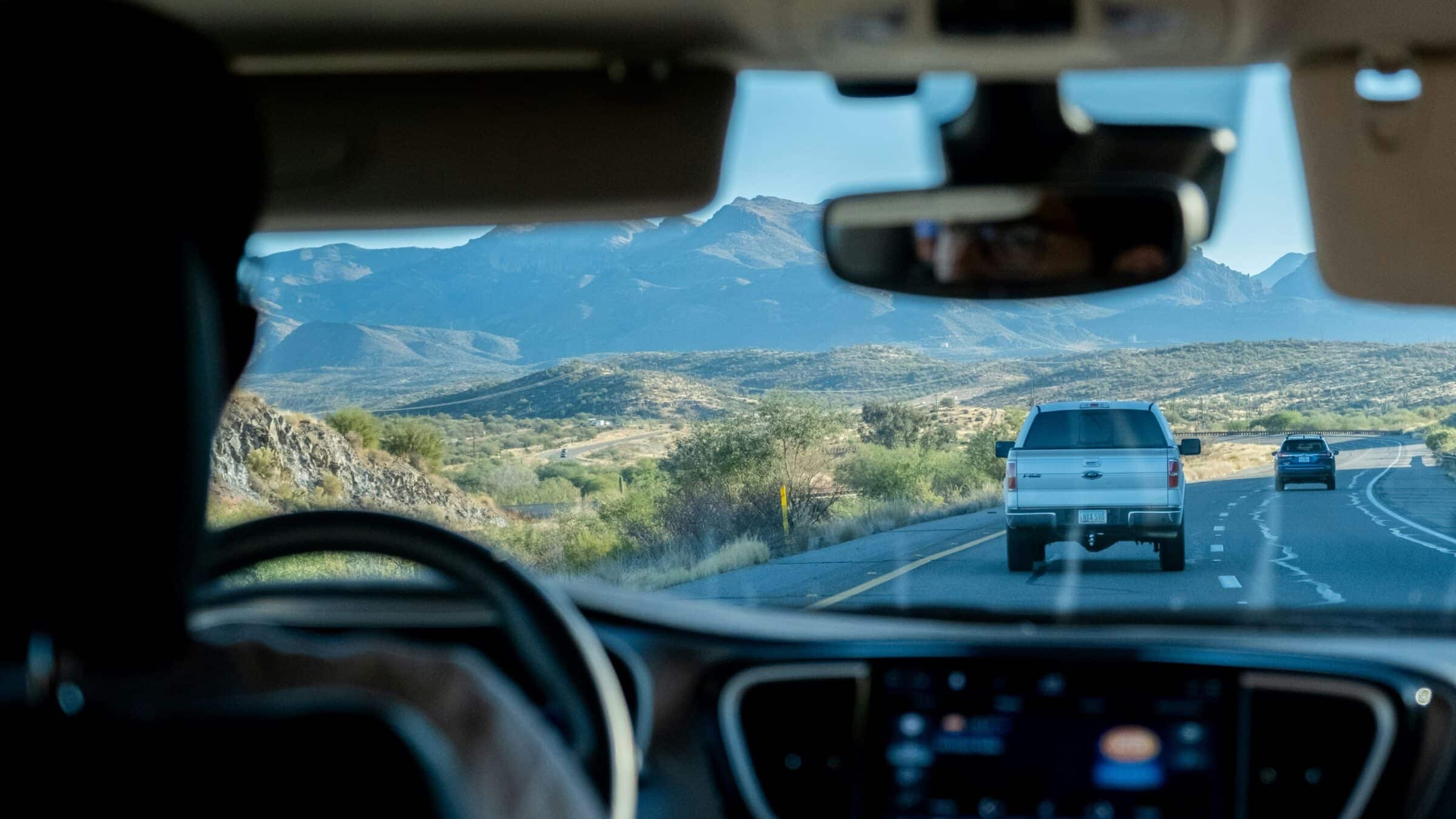
Visual scanning plays an equal part in keeping you safe. Look well beyond the car immediately in front of you to anticipate braking patterns. As you approach busy intersections in Abbotsford, for example, perform a left-center-right-left safety check and watch for drivers running red or yellow lights. When you come to a complete stop in traffic, keep an eye on your rearview mirror. Maintain enough room between your front bumper and the vehicle ahead to steer into an escape route if the driver behind you fails to slow down.
If you are involved in an accident, knowing what to do ensures you can assess injuries calmly, guide passengers safely away from traffic, and carry out proper reporting steps without panic.
–
While practicing defensive driving and maintaining safe distances are your best lines of defense, knowing how to position your body and properly adjust your safety gear can significantly mitigate injury when a collision is unavoidable. By squaring your back, maintaining a 9-and-3 steering grip, aligning your headrest, and ensuring proper seating habits for all passengers, you minimize impact forces and better protect yourself and your loved ones on the road.
Drivers who want to sharpen their hazard perception and accident avoidance skills can benefit from enrolling in our exclusive Behind The Wheel & On Your Own elearning course to prevent road emergencies before they happen.

Focused on supporting the people behind the wheel and sharing their knowledge. As Valley Driving School's Instructor Supervisor, I support scheduling and the day-to-day needs of our Car Instructors from Burnaby to Hope, and am proud to bring our collective road wisdom online.
Related Articles

6 Times You Can Proceed On a Red Light
Think a red light always means waiting for green? Review 6 legal situations in BC where you can safely proceed on red.
Defensive Driving on Freeways
Driving at 100 km/h, your vehicle covers nearly 28 meters every single second. When responding to a sudden event, your vehicle can travel 42 meters...
How Seniors Can Overcome Driving Anxiety
Does driving feel more stressful than it used to? Discover simple strategies to stay calm, comfortable, and confident behind the wheel.
