
Defensive Driving on Freeways
Driving at 100 km/h, your vehicle covers nearly 28 meters every single second. When responding to a sudden event, your vehicle can travel 42 meters before your foot even touches the brake pedal, which is nearly the length of an Olympic-sized swimming pool. Mastering fundamental freeway defensive driving practices allows you to spot hazards early and navigate fast-moving traffic with confidence. Developing solid observation skills and spatial awareness behind the wheel creates a safety margin that protects you and others when traffic changes without warning.
We’re covering some common freeway hazards, practical ways to keep a safe distance, when taking backroads makes sense, and safety tips for busy freeways across BC.
What are the most common risks on high-speed freeways?
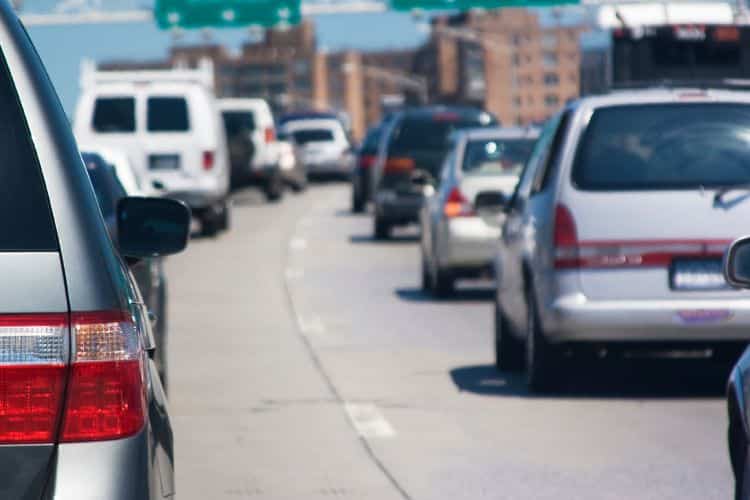
Tailgating and wide speed gaps across traffic lanes represent some of the main hazards on fast freeways. At 100 km/h under ideal conditions, stopping a car requires 70 to 100 meters. When aggressive drivers weave between lanes or close in quickly behind slower traffic, the available stopping space is reduced, potentially making sudden slowdowns extremely dangerous.
When traffic moves at 100 km/h or faster, stopping space disappears rapidly. Bringing a vehicle to a complete stop breaks down into three distinct phases, known as SEE – THINK – DO:
- SEE – Perception Time: First, your brain needs roughly 0.75 seconds to perceive a threat ahead. During this time, your vehicle travels 20 meters or more.
- THINK – Reaction Time: Next, physical reaction time takes another 0.75 seconds as you move your foot from the gas pedal to the brake pedal. Combined with perception time, your vehicle has traveled over 42 meters before the brakes engage.
- Braking Distance: Finally, mechanical braking distance adds another 40 to 50 meters on dry pavement for a passenger car. A pickup truck needs roughly 70 to 80 meters, while a fully loaded semi-truck requires 120 meters or more.
- DO – Total Stopping Distance: Combining perception, reaction, and braking distances, stopping completely from 100 km/h requires anywhere from 100 to 160 meters or more.
Tailgating removes this multi-step safety buffer, making high-speed rear-end collisions far more likely.
On multi-lane freeways, drivers share the road with vehicles that can be traveling at vastly different speeds. Some commuters drive well above posted speed limits, while drivers hauling heavy loads or towing trailers travel slower. These speed differences force faster drivers to make sudden lane changes, which interrupts traffic flow. Fast-moving cars closing in quickly behind slower traffic can cause sudden congestion, forcing everyone behind them to brake abruptly.
Aggressive drivers who weave between lanes without signaling add another layer of risk to high-speed driving. Squeezing into a tight gap between vehicles forces surrounding drivers to tap their brakes to recreate safe space. This sudden braking ripples backward through traffic, often causing phantom traffic jams or multi-car collisions far behind the original instigator. Spotting these aggressive patterns early helps you stay clear of unpredictable drivers before they put you in danger.
What defensive driving techniques keep you safe at high speeds?
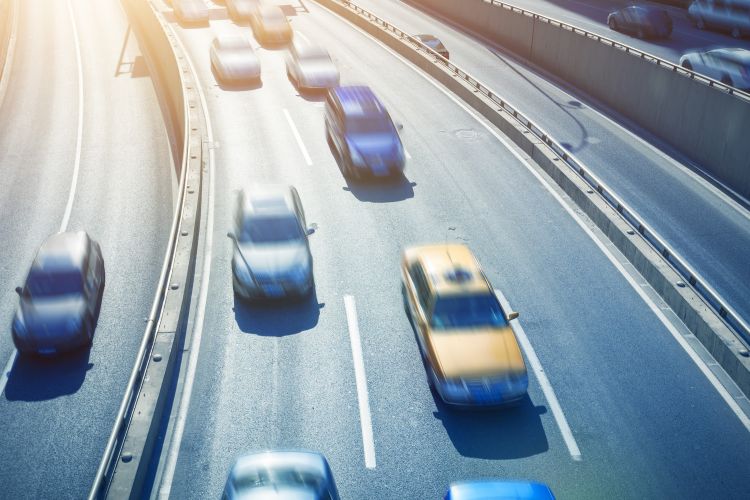
Maintaining adequate space and proactive scanning are foundational habits for safe high-speed driving. Techniques include applying a minimum 3-second following distance, positioning your vehicle away from blind spots, and continuously identifying open escape paths in adjacent lanes to handle sudden road hazards.
The standard 2-second following distance used on city streets is rarely sufficient on the freeway. Extending your following distance to 3 or 4 seconds gives your brain extra time to evaluate changing road conditions ahead. To measure this space, pick a fixed object like a road sign or reflective road marker. When the vehicle in front of you passes that marker, count “one-thousand-one, one-thousand-two, one-thousand-three.” If your front bumper reaches the marker before you finish counting, drop back slightly to widen the gap. When driving in wet weather or behind large commercial trucks, double this distance to 6 seconds or more.
Proper lane positioning keeps your vehicle visible and out of danger zones. Driving directly beside another car for extended periods traps you in their blind spot and eliminates potential escape routes for an emergency. If the driver next to you drifts out of their lane or swerves to avoid debris, you have nowhere to move. Adjust your speed slightly to stagger your position, keeping open space on at least one side of your vehicle whenever possible. When passing large semi-trucks, complete the pass promptly rather than lingering alongside their trailer, where their blind spots are largest.
Active visual scanning requires looking far down the road rather than staring at the vehicle directly ahead of you. Train your eyes to look 12 to 15 seconds ahead, which equals roughly 400 meters at freeway speeds. Looking far ahead allows you to spot slowdowns, construction zones, or emergency vehicles on the shoulder long before they force a sudden maneuver. As you scan ahead, check your rearview and side mirrors frequently to maintain a complete picture of surrounding traffic. Try to keep an open lane or road shoulder in mind so you have a planned escape path if traffic stops abruptly.
When should drivers consider avoiding major freeway routes?
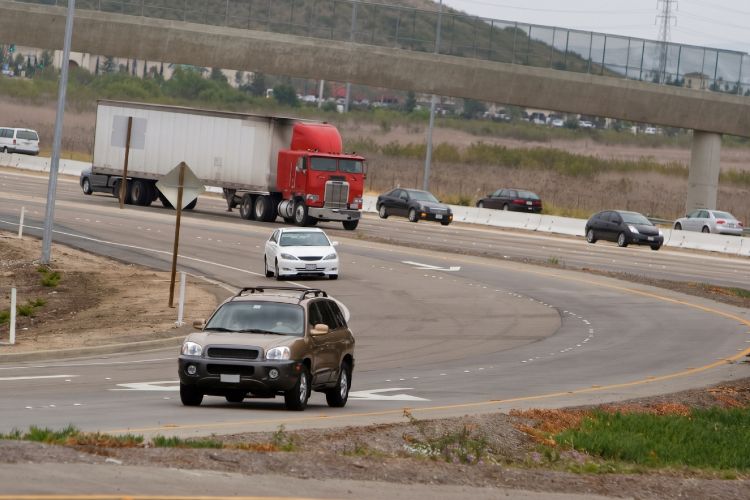
High-speed roads become increasingly risky during severe weather events, extreme congestion, or periods of driver fatigue. Choosing secondary routes or delaying travel significantly reduces collision risks whenever visibility, road traction, or alertness are compromised. Slower secondary roads give drivers more control when freeway driving conditions deteriorate.
Severe weather events alter freeway traction and visual range. Heavy coastal rain causes standing water to collect in tire ruts, creating a hydroplaning risk at speeds above 80 km/h. Hydroplaning occurs when tires lose contact with the pavement, and a driver’s steering and braking controls become ineffective. If torrential rain or dense fog reduces visibility to just a few car lengths, taking secondary roads through areas like Langley offers lower posted speeds and safer driving conditions. Taking lower-speed roads can provide more control and a safer route when weather conditions deteriorate on freeways.
Physical and mental fatigue impairs a driver’s ability to operate a vehicle safely at high speeds. Long hours behind the wheel or driving after a tiring shift slows cognitive processing, delays reaction time, and narrows peripheral vision. On open freeways, fatigue can cause microsleeping, which is when a driver closes their eyes for just a few seconds. But, at 100 km/h, a 3-second microsleep means traveling nearly 85 meters completely blind. If you notice yourself yawning or drifting between lane markers, pull over to rest as soon as you can find a safe place to do so.
Stop-and-go rush hour congestion presents unique hazards that differ from open-road driving. High volumes of commuter traffic combined with speed variations can create high-stress environments where rear-end crashes occur frequently. Distracted drivers who fail to notice braking traffic ahead can trigger chain-reaction collisions in seconds. If heavy traffic grinds your regular freeway route to a standstill, taking arterial streets or shifting your commuting hours allows you to bypass high-density bottlenecks altogether.
How do hazards differ on different freeways across BC?
Different freeways across British Columbia present distinct traffic patterns, terrain conditions, and safety challenges. Urban freeways feature dense commuter traffic and frequent merges that can cause sudden slowdowns. Long distance freeways through the interior introduce steep mountain grades and changing weather, requiring drivers to adjust their visual scanning habits and increase their following distances.
The Highway 1 corridor carries heavy daily commuter traffic through Burnaby and Surrey, and the high-volume multi-lane merges, narrow shoulder spaces near major bridge approaches, and sudden speed changes can make this stretch demanding! Drivers joining the freeway must use acceleration lanes fully to match the speed of freeway traffic before merging, as hesitating or merging at slow speeds forces freeway drivers to brake sharply, potentially creating dangerous speed differences. Monitoring overhead digital message boards and watching for sudden brake lights ahead helps you navigate these dense urban sections smoothly.
Moving east toward Abbotsford, the freeway opens up into wide, high-speed stretches carrying heavy commercial transport. Sharing the road with large semi-trucks and freight haulers requires extra spatial awareness, since big rigs have extensive blind spots along their sides and take significantly longer to come to a complete stop. Open terrain through the valley also leaves traffic exposed to sudden crosswinds, which can push high-profile trailers off course. Staggering your vehicle’s position and giving commercial drivers extra room keeps you safe in fast freeway traffic.
Heading into the interior, drivers will need to shift their driving strategy on routes like the Coquihalla Highway and through the Fraser Canyon. The Coquihalla features long, steep climbs and sudden shifts in elevation where weather can change rapidly from rain to snow or heavy fog. Maintaining speed control on long downhill stretches requires precision braking and throttle control. Meanwhile, routes through the Fraser Canyon present narrow lanes, tight rock cuts, and sudden sharp curves. Watching for falling debris, giving large trucks extra room on tight bends, and increasing your following distance allows you to navigate these mountain corridors safely.
–
Navigating fast freeways safely comes down to managing space and staying ahead of changing road conditions. Drivers can easily give themselves more time to respond to road hazards by maintaining a 3 to 4-second following distance, keeping open space around their vehicle, and recognizing when weather or fatigue makes secondary roads a better choice. Whether you’re dealing with busy urban freeways or steep mountain passes through the interior, practicing proactive scanning habits keeps you in complete control behind the wheel.

Focused on supporting the people behind the wheel and sharing their knowledge. As Valley Driving School's Instructor Supervisor, I support scheduling and the day-to-day needs of our Car Instructors from Burnaby to Hope, and am proud to bring our collective road wisdom online.
Related Articles

6 Times You Can Proceed On a Red Light
Think a red light always means waiting for green? Review 6 legal situations in BC where you can safely proceed on red.
How Seniors Can Overcome Driving Anxiety
Does driving feel more stressful than it used to? Discover simple strategies to stay calm, comfortable, and confident behind the wheel.
4 Types of Intersections & How to Navigate Them
Intersections are an important part of driving no matter where you are, but do you know all the different types and the rules for each?
