
What is the Dutch Reach?
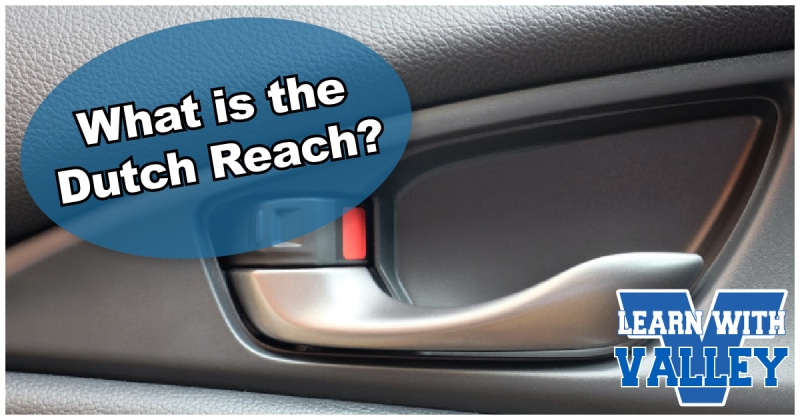
The Dutch Reach is a method to encourage observation from motorists, most specifically a shoulder check prior to opening a car door and is an easy change for drivers to add to their daily driving routine. To use the Dutch Reach, drivers use their right hand (the hand furthest from the door) to open the door when exiting the vehicle, instead of using their left hand (the hand closest to the door), which is most commonly used.
Let’s take a closer look at this best practice, including how to execute it properly and safely, as well as why we call it the Dutch Reach!
How do you perform the Dutch Reach?
This simple, easy practice can save lives and takes no more than a few seconds added on to your commute. However, it can be a tough habit to develop after many years of driving and opening the door with your left hand. To keep yourself on track with forming your new habit, tie a small piece of ribbon to your door handle to give yourself a visual reminder as soon as you go to reach for it.
Performing the Dutch Reach goes hand-in-hand with finishing any drive and exiting your vehicle. It’s a simple and straightforward process! Once you have arrived at your destination, put the vehicle in park, and turn off the ignition. Before reaching for the door handle, check the rearview mirror and both side mirrors for any oncoming traffic. Then using your right hand, the one farther from the door, open the latch. Using the right hand instead of the left forces your body and head to swivel to the left, allowing you to shoulder check for cyclists, pedestrians, or other motorists you may have missed in the rearview mirror.
If the coast is clear and free of other road users, carefully open the door while keeping your hand grasped on the handle and step out. Keeping your hand on the handle will allow you to pull the door closed quickly if you spot a hazard you didn’t see before!
The Dutch Reach can be used by passengers as well as drivers, and is a good practice to have whether you are exiting on the driver’s side or the passenger’s side of the vehicle. Shoulder checking for sidewalk traffic is just as important as shoulder checking for on-road traffic.
Why is it called the Dutch Reach?
The Dutch Reach technique is believed to have originated in the Netherlands, where cycling is a popular mode of transportation. The Dutch are known for their cycling culture and their emphasis on safety and have implemented many measures to protect cyclists, including separate bike lanes and special traffic signals. Dutch drivers developed and started using this maneuver for decades in response to the high number of accidents involving cyclists and car doors. The term for this type of incident is “dooring”, which means inadvertently opening your car door into the path of another motorist, pedestrian, or cyclist.
Many other countries and areas are adopting the Dutch Reach and British Columbia has even made it law that you must ensure it is safe to open your vehicle door before doing so. Failure to ensure safety when exiting your vehicle can result in a traffic offense fine!
Can cyclists use the Dutch Reach?
While the Dutch Reach is specifically designed for vehicle occupants to use, cyclists can employ other safety strategies to avoid potential incidents while riding. Cyclists should avoid cycling near the “door zone” whenever possible. This is the metre or so that extends into the roadway beside parked cars. If it is necessary for you to move away from parked vehicles and potentially further into traffic space, be sure to shoulder check before doing so. Motorists may not be watching you closely enough to notice your adjustments or body positioning as you adjust within your lane.
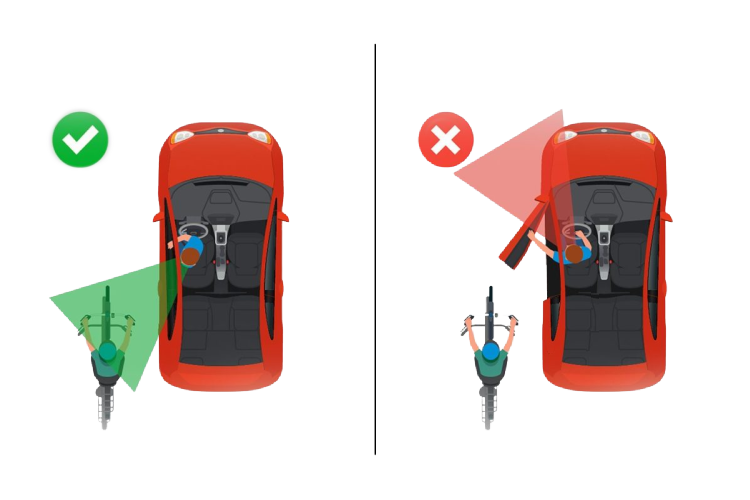
As you cycle, whether on the road, a pathway, sidewalk, or designated bike lane, scan the spaces ahead of you. Watch for signs that indicate someone may be entering or exiting a vehicle like exhaust emissions and tail lights, as well as ride-sharing cars and taxis, or other vehicles that make frequent stops like delivery trucks.
–
Even when parked, we can work together to keep our roadways safe for everyone. Sharing the road is a crucial part of responsible driving, and by doing your part, we can significantly reduce the likelihood of incidents involving other road users. Let’s make safety a top priority and strive towards creating a safer driving environment for all!
Related Articles
4 Types of Intersections & How to Navigate Them
Intersections are an important part of driving no matter where you are, but do you know all the different types and the rules for each?
How Car Driving Lessons Make Roads & Drivers Safer
Looking to build lasting confidence behind the wheel? Discover how car driving lessons sharpen observation skills and make BC roads safer for everyone.
Upcoming Changes to the Graduated Licensing Process
ICBC’s Graduated Licensing Program is being updated for 2026: skip the Class 5 road test and complete a 12-month safety period. Learn more about the timelines and next steps.
