
How to Become a HandyDART Driver in BC
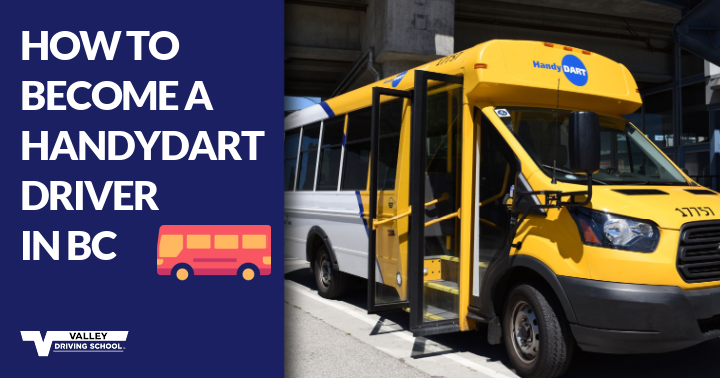
The HandyDART program is an integral part of British Columbia’s public transit network, providing safe, reliable, door-to-door transportation for individuals with mobility challenges. Driving for HandyDART is a demanding but profoundly rewarding career within the public transportation sector, offering a unique blend of professional driving and essential community service.
If you are interested in a career as a HandyDART driver, this guide provides a practical overview of the licensing requirements, the specialized nature of the job, and the steps required to secure employment.
What is the licensing requirement for driving a HandyDART vehicle?
To operate a HandyDART vehicle, you must obtain a commercial driver’s licence. The specific class you need is the Class 4 Unrestricted licence. It is important to understand the difference between commercial licence classes, as they determine what vehicles you are legally allowed to drive for transporting passengers for work.
Class 4 Unrestricted licence: This is the minimum requirement for a HandyDART driver. It permits you to drive buses with a seating capacity of up to 25 passengers (including the driver), as well as taxis, ambulances, and most shuttle vehicles. These vehicles are generally the type used for specialized community service.
Class 2 licence: This licence permits you to operate buses with a capacity of more than 25 passengers. This is the licence generally required for large city transit buses. While some employers may prefer a Class 2 licence for maximum scheduling flexibility, the Class 4 Unrestricted is all that is strictly required for the HandyDART shuttle itself. If you are aiming for future advancement in municipal transit, considering truck training to achieve a Class 1 licence, or straight to a Class 2, might be beneficial down the line.
Class 4 Restricted licence: The class 4 restricted licence limits you to a maximum of 10 passengers (including the driver) and is suitable for smaller taxi or ride-hailing services. It is not sufficient for a HandyDART vehicle.
How do I obtain a Class 4 licence in BC?
Obtaining your Class 4 Unrestricted involves a multi-step process that confirms you meet the high standard expected of a professional driver:
Meet Basic Requirements: You must be at least 19 years old and hold a full-privilege Class 5 (or equivalent) licence. Many new drivers receive foundational car training before pursuing commercial upgrades.
Pass the Knowledge Test: You must successfully complete the ICBC Class 4 Knowledge Test to receive your learner’s permit.
Complete a Commercial Driver’s Medical Exam: You must have a medical professional complete a specialized form confirming you are physically fit to handle the demands of commercial driving, including high vision and health standards. While this form is often issued at the time of your road test, you must ensure it is completed and submitted to RoadSafetyBC within 45 days. Timely submission is essential to ensure your licence upgrade is processed successfully.
Specialized Training and Road Test: The ICBC Class 4 road test is a rigorous assessment. It goes beyond standard driving to include a full, meticulous pre-trip inspection of the commercial vehicle, as well as a demonstration of defensive driving, mirror use, and passenger safety checks. Professional Class 4 complete program instruction is highly recommended to ensure you are prepared for this demanding test.
What are the primary responsibilities of a HandyDART driver?
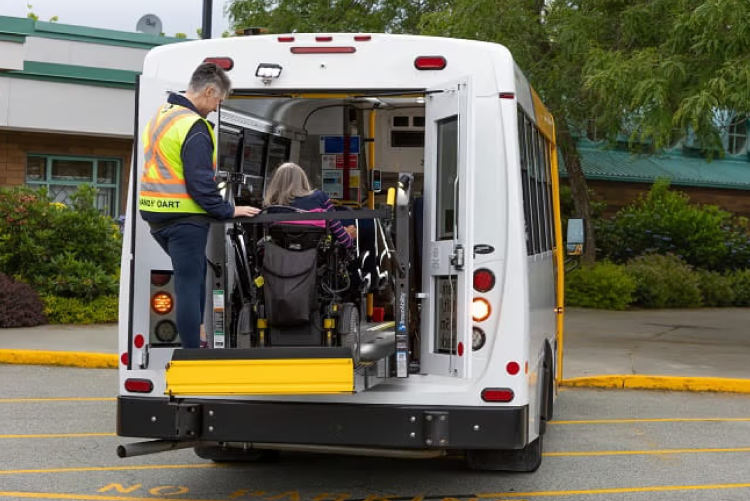
The HandyDART driver is an accessible transportation specialist. The job differs significantly from driving a conventional transit bus because it involves direct, hands-on assistance for customers with diverse needs. HandyDART is a door-to-door, shared-ride service. The driver is expected to assist the customer from the accessible exterior door of the pick-up location to the accessible exterior door of the destination. However, the driver’s role has clear boundaries.
Drivers are allowed, and expected to, assist the customer on and off the vehicle using the lift or ramp. They are also expected to secure wheelchairs, scooters, and CSA-approved child car seats, and assist passengers with seatbelts.
Drivers are generally not permitted to leave the vehicle out of sight to enter a building or maneuver mobility aids on stairs. They are also not required to lift customers or carry parcels and luggage (customers are typically limited to two small parcels that must be held on their lap).
An important part of the role is operating the specialized vehicle equipment safely. HandyDART vehicles are equipped with lifts or ramps to facilitate boarding. Once aboard, the driver must securely fasten mobility aids.
This process involves using complex securement devices and ratchets connected to the frame of the bus and the mobility aid. Drivers must verify that the passenger’s mobility device meets specific safety guidelines regarding structural integrity and securement points. For example, the combined weight of the passenger and a powered mobility device often cannot exceed approximately 272 kilograms.
What other requirements are there for driving a HandyDART vehicle?
Success as a HandyDART operator relies heavily on your “soft skills” and professional temperament. This is a people-first job, requiring patience, empathy, and clear communication.
Patience and Professionalism: HandyDART is a shared-ride service, meaning routes and travel times can be variable. Customers may become anxious or frustrated due to unexpected delays. The driver must maintain a calm, professional, and informative demeanor at all times, demonstrating conflict resolution skills. This high level of service is crucial to making the service reliable for the community.
Physical Demands: Securing mobility aids involves considerable physical effort, including bending, kneeling, and handling heavy securement straps. It also requires the ability to assist passengers with balance issues or transfers. This makes good physical fitness an essential, practical requirement of the job. It is not just about driving; it is about providing physical support.
The Importance of a Calm Demeanor: Drivers are often the first face of public accessible transportation a customer sees. For vulnerable clients, consistency and a positive attitude are highly valued. This may also be relevant for senior driver programs who may want to explore new career paths later in life.
How can I apply and get hired to drive a HandyDART vehicle?

The path to employment begins with preparing the necessary documentation and understanding the two main service providers in BC: TransLink and BC Transit.
Where to Apply:
- Metro Vancouver (e.g., Surrey, Burnaby, Richmond): Service is managed by TransLink and delivered by contracted operators. You would apply directly to those contracting companies.
- Rest of British Columbia (e.g., Fraser Valley, Victoria, Kelowna): Service is managed by BC Transit and delivered by local operating companies.
Gathering Key Documents: Be prepared to submit the required documents early in the application process. These include your driver’s abstract and claims history, as many companies require an acceptable driving record with a favorable claims history. You will also need to submit a clear criminal record check, as you’ll be working with vulnerable persons, and a commercial driver’s medical exam that confirms your fitness to drive. You will also need to submit your proof of eligibility to work in Canada.
Company Training and Onboarding: If you are successful through the interview process, which often includes scenario-based questions to assess your customer service and conflict resolution skills, you will receive comprehensive training from your employer. This is usually paid, intensive instruction covering specific vehicle operation (lifts, securement, radio), defensive driving techniques tailored to a small bus, first aid and emergency procedures, and customer communication and etiquette protocols.
This extensive, company-mandated training ensures all new HandyDART driver employees are fully prepared to uphold the high safety and service standards expected by the public.
–
A career in accessible transportation is an important choice that supports community independence and mobility across BC. By mastering your Class 4 licence requirements, understanding the physical and emotional demands of the role, and committing to passenger-first service, you will be well on your way to a rewarding professional life.
For further reading on commercial licensing, be sure to review our comprehensive guides on How to Become a Bus Driver in BC and the 6 Common Mistakes to Avoid on Your Shuttle Bus Road Test.
Related Articles
4 Types of Intersections & How to Navigate Them
Intersections are an important part of driving no matter where you are, but do you know all the different types and the rules for each?
How Car Driving Lessons Make Roads & Drivers Safer
Looking to build lasting confidence behind the wheel? Discover how car driving lessons sharpen observation skills and make BC roads safer for everyone.
Upcoming Changes to the Graduated Licensing Process
ICBC’s Graduated Licensing Program is being updated for 2026: skip the Class 5 road test and complete a 12-month safety period. Learn more about the timelines and next steps.
