
Class 1 vs Class 3: Which Licence Fits the Job You Want?
You know you want to drive a commercial truck for a living. You just need to figure out which licence gets you there without wasting time or money. The choice between a Class 1 and Class 3 licence in BC comes down to what you want to drive and what you want to earn.
Both licences open doors across the transportation sector, but they serve completely different segments of the economy. Before enrolling in commercial driver training, you need to match your licensing goals with your daily life, your budget, and the specific vehicles local employers are putting on the road.
What is the difference between a Class 1 and a Class 3 licence?
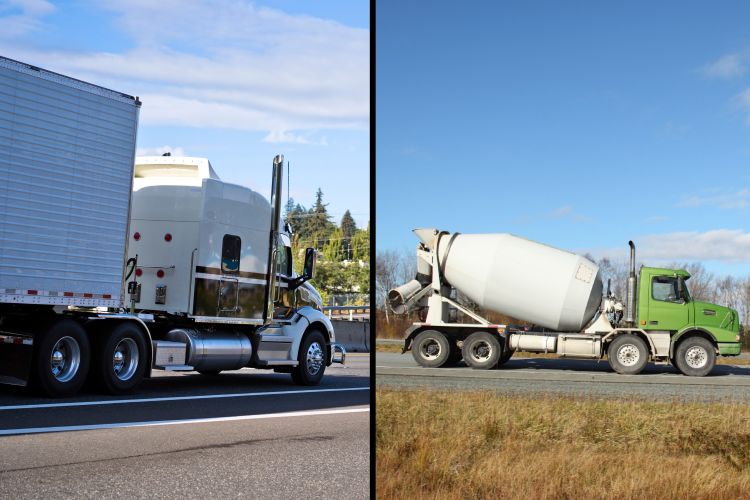
A Class 1 licence allows you to drive semi-trailers and tractor-trailers, while a Class 3 licence covers heavy single-unit trucks like dump trucks and concrete mixers without heavy trailers. A big difference between the two classes of licence is the training requirement: Class 1 drivers in BC must complete a mandatory 140-hour MELT course, whereas Class 3 training has no provincial minimum hour requirement.
The vehicles in the two different classes are also significantly different. A Class 3 vehicle is built on a single rigid chassis, typically operating with three axles. You can pull a utility trailer behind a Class 3 vehicle, but that trailer cannot exceed a licensed gross vehicle weight of 4,600 kg if the vehicle combination utilizes air brakes.
A Class 1 licence removes those trailer weight caps entirely. It qualifies you to haul 53-foot commercial semi-trailers connected via a fifth-wheel coupling, full trailers, and multiple trailer combinations. In addition, a Class 1 licence serves as the top-tier commercial designation in British Columbia, allowing you to operate any motor vehicle or combination of vehicles covered under Class 1, 2, 3, 4, and 5.
Quick comparison between licences:
- Primary vehicle types: Class 3 covers dump trucks, concrete mixers, garbage trucks, and mobile cranes. Class 1 covers tractor-trailers, semi-trailers, container haulers, and flatbeds.
- Trailer weight limit: Class 3 allows a maximum of 4,600 kg when using air brakes. Class 1 has no trailer weight restriction.
- Minimum age: Class 3 requires a minimum age of 18. Class 1 requires a minimum age of 19.
- Mandatory Entry-Level Training (MELT): Class 3 has no provincial hour mandate. Class 1 requires a mandatory 140-hour minimum course.
- Prerequisites: Both require a full Class 5 licence, passing a commercial knowledge test, and submitting a driver medical examination report.
What jobs can you get with a Class 3 licence?
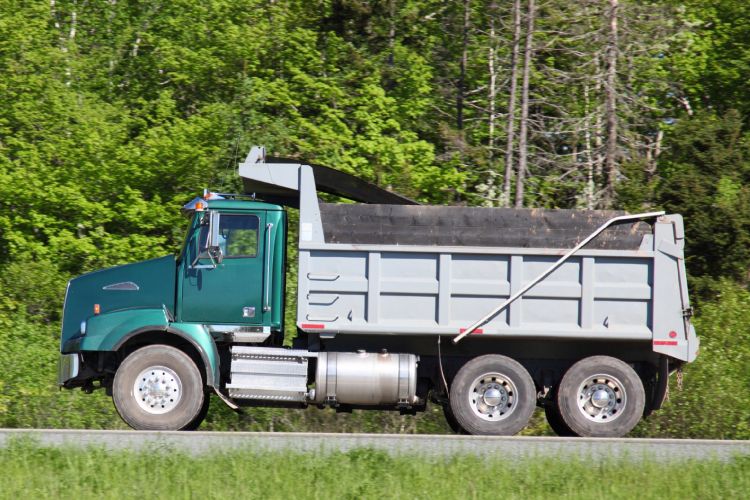
A Class 3 licence covers heavy single-unit trucks like dump trucks, fire trucks, and concrete mixers without heavy trailers. Class 3 drivers form the backbone of regional construction and municipal infrastructure. Because straight trucks carry their load directly on the frame without a pivoting trailer, they can navigate tighter urban streets, active job sites, and residential neighbourhoods where full tractor-trailers cannot fit.
Some of the most common Class 3 driving roles in the region include:
- Dump truck drivers: Transporting gravel, aggregate, and soil between local quarries and construction sites. Many drivers run tandem or tridem dump trucks on local roads throughout Langley and the Fraser Valley without needing a trailer endorsement.
- Concrete mixer drivers: Delivering ready-mix concrete to foundations and job sites, managing pour chutes, and keeping drum rotations timed properly.
- Private and Municipal waste management operators: Running automated side-loaders or rear-loading collection trucks for residential and commercial waste and recycling.
- Hydro-vac and vacuum truck operators: Working with excavation crews to expose underground utilities safely using high-pressure water and industrial vacuum systems.
- Firefighters: Emergency vehicles like pumpers, ladder trucks, and water tenders require a Class 3 licence with an air brake endorsement.
Drivers working Class 3 roles are generally paid an hourly wage rather than by the kilometer. Because the work is often tied directly to local job sites and daily pickup schedules, shifts start and finish at the same yard every day. When comparing training programs, look for a school that maintains an active student job board. Having direct access to vetted local employers gives you an immediate advantage when you are ready to enter the workforce.
What jobs can you get with a Class 1 licence?

A Class 1 licence qualifies you to haul freight in tractor-trailers across regional highways and long-haul interprovincial routes. Common jobs include dry van transport, refrigerated food delivery, container port drayage, and flatbed hauling. Drivers can choose between regional day-cab shifts with local return or long-haul highway runs that spend multiple nights on the road.
Holding a Class 1 licence makes you eligible for the widest range of commercial driving opportunities in North America. Transport carriers rely on Class 1 operators to move goods across mountain passes, between distribution hubs, and through border crossings.
Key Class 1 driving sectors include:
- Regional and line-haul freight: Operating tandem-axle tractors pulling 53-foot dry vans or temperature-controlled trailers between logistics centers, warehouses, and grocery distribution yards.
- Intermodal container drayage: Moving shipping containers between ports, rail terminals, and regional drop yards across Abbotsford and Vancouver harbour facilities.
- Flatbed and heavy equipment hauling: Securing and moving steel, timber, construction machinery, and industrial freight using step-decks, lowbeds, and specialized multi-axle trailers.
- Bulk tanker hauling: Transporting liquid food products, fuels, and industrial chemicals, requiring precise surge control and liquid-load management.
- Logging and forestry hauling: Moving raw timber on off-highway logging roads and secondary routes throughout rural BC.
Class 1 work offers diverse lifestyle options. Regional drivers running day-cabs can stay close to home and sleep in their own beds most nights. Drivers running over-the-road routes spend days or weeks on the freeway, racking up highway mileage and exploring routes across Canada and the United States.
What does training look like for each licence?

Class 1 training requires completing a mandatory 140-hour Mandatory Entry-Level Training (MELT) program at an ICBC-approved driving school, combining 47 classroom hours with 93 hours of practical yard and on-road instruction. Class 3 training offers far more flexibility, typically ranging from 12 to 30 hours of practical instruction, with comprehensive career programs adding professional classroom training.
The time commitment and financial investment differ substantially between these two licences. Understanding the course structure helps you choose the path that best matches your timeline.
The Class 1 MELT pathway
To earn a Class 1 licence in British Columbia, every new driver must complete an approved MELT program. ICBC established this standard to ensure all tractor-trailer drivers master coupling procedures, safe backing techniques, and mountain driving dynamics before taking their road test. MELT hours are formally tracked and students must pass specific practical and written assessments before the school can issue the completion certificate required to book an ICBC road test.
Before you can begin in-cab MELT lessons, you must meet the provincial prerequisites:
- Be at least 19 years old.
- Hold a full-privilege Class 5 or Class 6 licence, or an out-of-province equivalent.
- Pass the ICBC Class 1 commercial knowledge test, which includes air brake theory.
- Submit an ICBC Driver Medical Examination Report completed by a physician.
At Valley Driving School, the Class 1 MELT Complete Program goes beyond the basic provincial threshold. It delivers over 150 hours of total instruction, including 52.5 hours across 14 theory sessions, 16 hours across 8 hands-on yard sessions, and 70 hours across 19 in-cab sessions. The training covers 53-foot trailer backing practice, highway trips, and mountain route training. Students typically finish the course in 8 weeks, with flexible completion timelines ranging from 7 to 12 weeks depending on scheduling.
Class 3 training options
Because Class 3 is not subject to a government-mandated hour framework, training can be customized to your specific career path. You can start Class 3 training at age 18, one year earlier than Class 1.
Students choose between several structured programs based on vehicle type and career focus:
- Class 3 Automatic Program: Designed for drivers whose industries operate automatic fleets, such as municipal fire departments and modern delivery operations. This program includes 12 hours of combined pre-trip and on-road instruction, and truck rental for the ICBC road test. Testing in an automatic vehicle earns you a restricted licence valid for automatic trucks only.
- Class 3 Standard Program: Manual transmissions remain standard across heavy-duty dump trucks, snow plows, and crane carriers. This program includes 20 hours of combined pre-trip and on-road instruction, and truck rental for the ICBC road test. Testing in a standard vehicle earns you an unrestricted licence valid for both manual and automatic trucks.
- Class 3 Career Program: A complete job-entry course featuring 30 hours of pre-trip and on-road instruction, and 16 hours of classroom employment skills training covering cargo securement and professional driving techniques. The program regularly qualifies for provincial training funding through WorkSafeBC and WorkBC.
Drivers who do not yet hold an air brake endorsement can complete the standalone 7-hour Air Brake Theory Course prior to taking their ICBC knowledge test.
Can you start with Class 3 and upgrade to Class 1 later?
Yes, you can upgrade from a Class 3 to a Class 1 licence later. Keep in mind that a Class 3 licence does not grant training credits toward Class 1, and ICBC will still require all new Class 1 applicants to complete the full 140-hour MELT course. However, previous Class 3 driving provides valuable road experience and vehicle handling skills.
Many professional drivers take this exact approach. Starting with a Class 3 licence allows you to enter the workforce at age 18, start earning an income immediately, and gain real-world commercial road experience. You become comfortable managing air brake systems, completing thorough daily pre-trip inspections, and navigating commercial vehicle clearances.
When you decide to transition to Class 1 down the road, you will already possess sharp road sense and traffic awareness. While you will still need to complete the full classroom, yard, and on-road MELT curriculum to meet ICBC licensing standards, your background in heavy vehicles will make mastering shifting, trailer positioning, and highway operation much more intuitive.
Which commercial licence is right for you?

Choose a Class 3 licence if you want the fastest route to a local job, lower upfront training costs, and need to get started as soon as possible. Choose a Class 1 licence if your career goal is hauling long-haul cargo, maximizing long-term commercial driving opportunities, or operating the largest heavy vehicle combinations permitted on Canadian roads.
Every driver has different priorities. Breaking down your options by practical life factors makes the decision straightforward.
A Class 3 licence is best if you:
- want to start working within a few weeks rather than a few months
- prioritize sleeping in your own bed every single night
- are targeting local construction, municipal utilities, concrete delivery, or the fire service
- are 18 years old and want to launch your professional driving career right away
- prefer a lower upfront training cost that fits a tighter personal budget
A Class 1 licence is best if you:
- want to operate full tractor-trailers, highway vans, and flatbeds
- plan to pull heavy equipment trailers or ponies behind commercial trucks
- want access to long-distance highway routes across BC, Canada, or the United States
- want the master commercial licence that covers all commercial vehicles
- have the schedule flexibility to complete an intensive 8-week full-time training program
Frequently asked questions
Do I need MELT for a Class 3 licence?
No, you do not need MELT for a Class 3 licence. Mandatory Entry-Level Training is strictly an ICBC requirement for Class 1 commercial tractor-trailer applicants. Class 3 training allows you to take as many or as few lessons as you need to build practical competence before attempting your road test.
Is a Class 3 road test easier than a Class 1 road test?
A Class 3 road test is generally easier because you are operating a single-unit vehicle without a trailer pivot point. Maneuvering around tight city corners, maintaining lane position, and reversing in straight trucks is far simpler than backing a 53-foot semi-trailer into a tight loading bay.
Which licence pays more in BC?
Class 1 drivers generally have higher total earning potential due to long-haul mileage, while Class 3 drivers earn predictable hourly wages. WorkBC reports a median annual salary of $68,000 (over $30 per hour) for Class 1 transport truck drivers, with top earners reaching $100,000, compared to $62,000 to $75,000 annually for typical Class 3 straight-truck and equipment operators.
Can I drive a bus or ambulance with a Class 1 or Class 3 licence?
A Class 1 licence authorizes you to operate Class 2 buses and Class 4 restricted and unrestricted passenger vehicles, including taxis, rideshare, passenger vans, and ambulances. A Class 3 licence does not allow you to drive passenger-carrying buses or ambulances. For dedicated passenger transport, look into specific Class 2 or Class 4 licensing.
Should I get an automatic or standard Class 3 licence?
Taking your Class 3 road test in a manual transmission truck gives you an unrestricted licence, permitting you to drive both standard and automatic vehicles. If you road test in an automatic, your licence carries a restriction limiting you to automatic trucks only. Standard provides more job versatility across fleets.
–
Choosing between a Class 1 and Class 3 licence comes down to where you want to drive, how you want to work, and how fast you need to get moving. If you want a quick entry into local construction or municipal work with predictable shifts, Class 3 gets you on the road fast. If your sights are set on highway freight, maximum flexibility, and heavy combinations, Class 1 remains the industry gold standard.
Valley Driving School provides comprehensive truck driver training across our modern campuses. To explore your training options further, take a look at our related guides: Comparing Class 3 Automatic & Standard and Mandatory Entry Level Training (MELT) in British Columbia.

Focused on supporting the people behind the wheel and sharing their knowledge. As Valley Driving School's Instructor Supervisor, I support scheduling and the day-to-day needs of our Car Instructors from Burnaby to Hope. I am proud to bring our collective road wisdom online, where every article I share is verified through my own expertise or reviewed by another subject matter expert.
Related Articles
drivers Guide to Restrictions and Endorsements on Your BC Licence
Curious if your BC driver's licence has conditions? Check how restriction codes and special endorsements affect your everyday driving.
What It Takes to Drive a Fire Truck in BC
Pursuing a career in emergency services requires dedication, physical fitness, and strong vehicle handling skills. If you are preparing to become a firefighter, earning a...
How Do The GLP Changes Affect Your Licence?
Received an official ICBC letter about upcoming graduated licensing changes? Check how updated restriction codes and driving record rules impact your licence.
