
4 Types of Intersections & How to Navigate Them
You come across them every day and often don’t give them much thought unless unsure of how to proceed. Intersections are all over our roads and an important part of driving no matter where you are, but do you know all the different types and the rules for each?
We’re diving into four major types of intersections – controlled, uncontrolled, traffic circles, and roundabouts – and how to navigate through them!
Controlled Intersections
Certainly the most common, controlled intersections are intersections directed by signage or traffic lights. These are easy to know how to proceed as long as you know the basic right-of-way road rules as well. To help, we’ll go over some of the most common controlled intersections and how to proceed accordingly.
Traffic Lights
Probably the most familiar controlled intersection is one controlled by traffic lights. Even before becoming a driver, you may already know what the lights mean at an intersection. A steady red light means you must come to a complete stop prior to the stop line and wait for a green light before proceeding straight or turning left. Right turns on red lights are permitted when safe to do so but are not required. Be sure to look for a regulatory sign restricting right turns on red lights.
A steady green light means you can proceed if the intersection is clear and it is safe to continue. A yellow light means that the signal is about to turn red, and you must stop before entering the intersection unless you can’t safely stop in time.
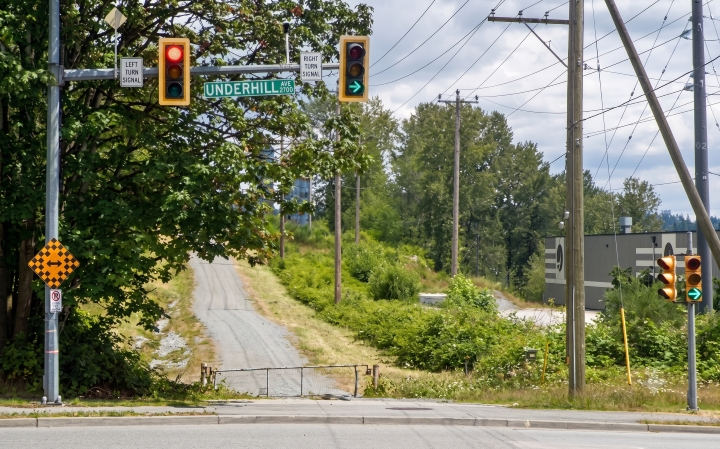
You may also encounter advance arrows—most commonly for left turns, but occasionally for right turns as well. Known as a protected advance signal, a green advance arrow gives you the right-of-way to make your turn while oncoming traffic faces a red light. You may proceed as soon as the arrow turns green, provided the intersection is clear. If the arrow changes to yellow, come to a safe, controlled stop unless you are already in the intersection or cannot stop safely.
Traffic Signs
At a four-way stop where stop signs are present on each intersection corner, the order in which vehicles resume driving is the order in which they arrived at the intersection. Whoever stopped first, resumes driving first. If two vehicles arrive at the same time, the vehicle on the right resumes driving first. If two vehicles who are facing each other arrive at the same time and one is signalling to turn left, right-of-way rules dictate that it must yield to the vehicle that is driving straight through.
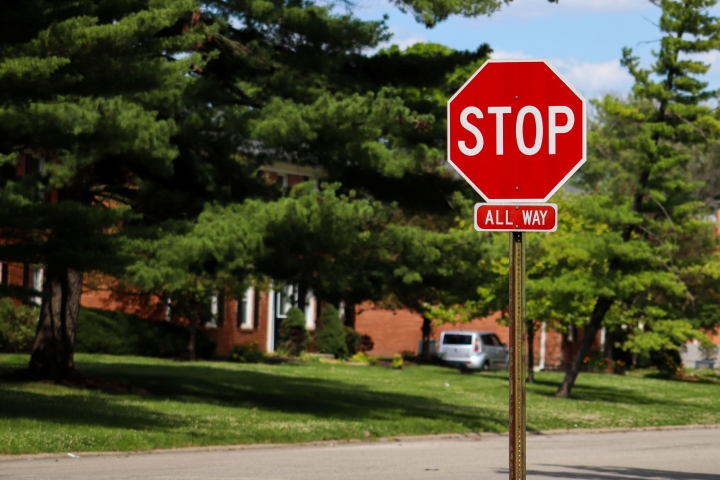
At two-way stops, where two streets intersect but only one street has stop signs, the intersecting street without any signs is a through lane. This means that traffic on the through street has the right-of-way. If you find yourself stopped at one of these intersections, you must wait for a safe gap in traffic before you turn onto the through street or drive across. Again, if there are two vehicles stopped and one is turning left, the left-turning vehicle must yield the right-of-way to the vehicle that is driving straight through. The exception here is, if the vehicle has entered the intersection in order to turn left, then the driver going straight through must yield.
Intersections with right turn yield signs follow similar right-of-way rules. The most important thing to remember is the through street (the street that doesn’t have any signs) again has the right of way. Vehicles yielding to this street do not need to come to a complete stop unless required to by a heavy flow of oncoming traffic, pedestrians, or cyclists, and instead can proceed after slowing down to check for safety.
Uncontrolled Intersections
Uncontrolled intersections are more likely in residential areas. These intersections have no signage or lights and are typically found in low traffic areas. As you approach an uncontrolled intersection, slow down and watch for surrounding traffic, pedestrians, and cyclists, and scan the intersection from left to right. When a vehicle has arrived at the intersection ahead of you, continue to slow down and yield to that vehicle. If two vehicles arrive at the same time, right-of-way is always given to the vehicle on the right. This means if you are on the left, you not only yield, but allow the vehicle on your right to resume driving before you proceed yourself.
Roundabouts
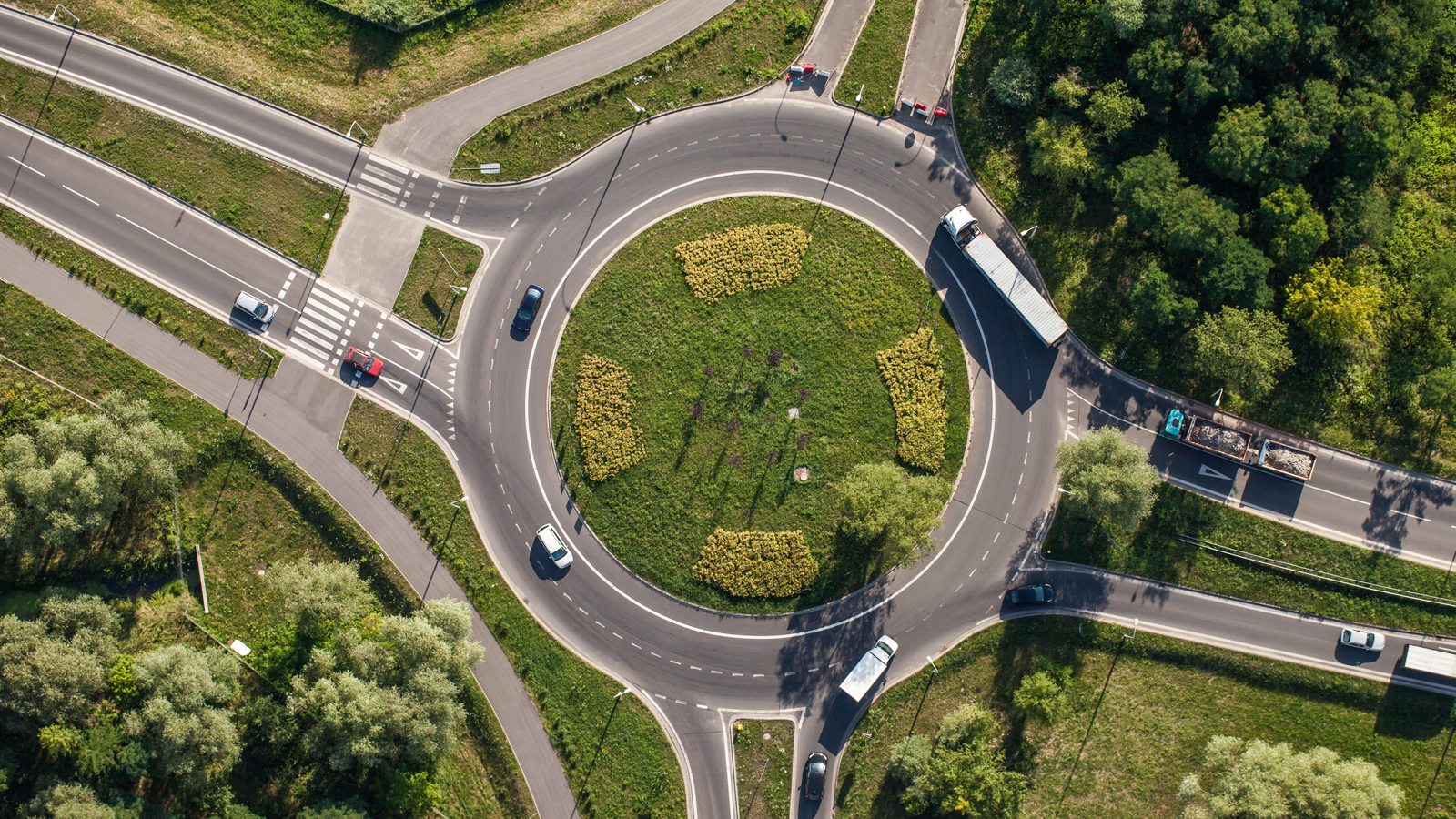
Often dreaded or at the very least, a source of confusion, are roundabouts. These larger traffic circles are often found in busier areas and usually have multiple lanes. It is important to know where you are going to choose the correct lane before you enter the roundabout. Look for lane use signs and markings are displayed as you approach. Always enter to the right and travel counter-clockwise. If there are multiple lanes be sure to change lanes before entering the roundabout as you should not change lanes while inside the roundabout. Yield to pedestrians crossing in the marked crosswalk prior to entering the roundabout. Yield to any vehicles in either lane in the roundabout prior to entering to ensure no conflict.
There are three more important tips to remember when using a roundabout. One – All traffic enters to the right and exits to the right. You do not need to signal to enter the roundabout, only signal right when you are exiting. Two – Avoid traveling alongside large vehicles like trucks and buses as they may need more than their lane to go through. Three – do not change lanes while in a roundabout.
Traffic Circles
Contrary to popular belief, there is a difference in traffic circles versus roundabouts. Traffic circles are the less overwhelming cousins of roundabouts: smaller in size and often found in residential neighbourhoods. When approaching traffic circles, be cautious and slow down. If any signs are present, be sure you obey those before proceeding. If no signs are present, treat it as if it were an uncontrolled intersection.
Traffic already in the circle has the right of way, but if you find yourself coming to the intersection at the same time as another vehicle, the vehicle on the right is to proceed first. Enter and exit the traffic circle to the right, traveling counter-clockwise. Both roundabouts and traffic circles are intended to lessen points of conflict at an intersection, reduce speeds and allow for a continuous flow of traffic.
–
Getting through any intersection can be a breeze as long as your observation skills are being used effectively. Whatever kind of intersection you are navigating, remember to always be cautious. Just because you have the right of way, other drivers may not be paying attention to all the signs and signals. Ensure your movement can be made in safety.


Related Articles
How Car Driving Lessons Make Roads & Drivers Safer
Looking to build lasting confidence behind the wheel? Discover how car driving lessons sharpen observation skills and make BC roads safer for everyone.
Upcoming Changes to the Graduated Licensing Process
ICBC’s Graduated Licensing Program is being updated for 2026: skip the Class 5 road test and complete a 12-month safety period. Learn more about the timelines and next steps.
Technology on the Road: Driver Aids & the ICBC Road Test
Innovations are happening fast in the automotive industry. Do you know what technologies you can and can't use during your ICBC road test? We take a look at all the details from dash cams to autonomous parking.
