
Drivers Guide to Emergency Vehicle Right-of-Way Rules in BC
We have all been there: you are driving along, perhaps thinking about your to-do list or what to make for dinner, when a flash of red and blue appears in your rearview mirror. The sudden wail of a siren can be jarring, and in that split second, it is easy to feel a momentary surge of panic. You know you need to get out of the way, but where exactly should you go? How quickly should you move? These moments require a calm head and a clear understanding of the rules to ensure that first responders can reach their destination without delay.
In this guide, we will break down the legal requirements for yielding to emergency vehicles in British Columbia. We will cover the specific steps you need to take when sharing the road with emergency vehicles, how to handle complex situations like intersections and multi-lane highways, and the “Slow Down, Move Over” legislation that protects workers on the side of the road.
What are the emergency vehicle right-of-way rules in BC?
Under the British Columbia Motor Vehicle Act, drivers must immediately pull to the nearest curb or edge of the roadway and come to a complete stop when an emergency vehicle approaches with its siren or flashing lights activated. You must remain stopped until the emergency vehicle has safely passed or until a peace officer directs you otherwise.
When you see or hear an emergency vehicle, your first step should be to check your mirrors and signal your intent to pull over. It is important to avoid slamming on your brakes or making sudden, erratic maneuvers that could catch the emergency vehicle driver or other road users off guard. If you are navigating the busy lanes of Highway 1 near Burnaby, look for the safest opening to your right and move steadily toward the shoulder. Keep your signal flashing until you have come to a full stop so others know exactly what you are doing.
How should drivers respond to emergency vehicles at intersections?
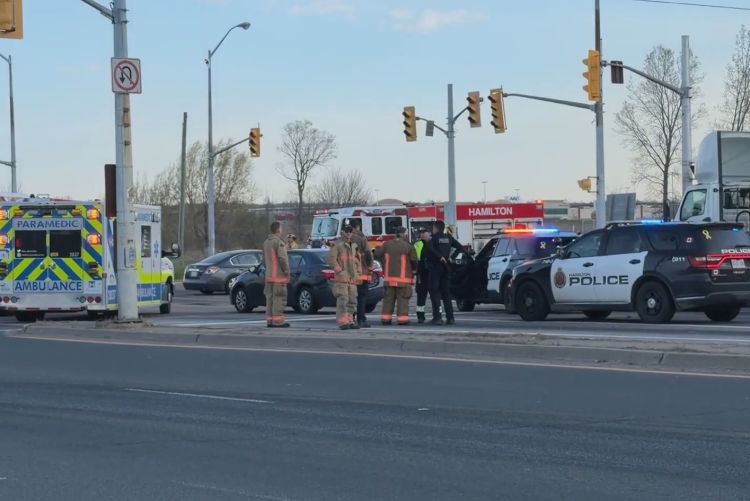
If you are approaching or already stopped at an intersection when an emergency vehicle nears, do not enter the intersection or attempt to “run” a red light to get out of the way. If you’re still approaching the intersection, pull over to the curb and avoid blocking the various lanes that could be used to get through the intersection – including emergency vehicles needing to use a right-turn or yield lane. If you are already in the middle of the intersection, continue through calmly in the direction you were already travelling, and once you have cleared the intersection, pull over to the right-hand curb and stop.
If you are stopped at an intersection, just stay put! Even if you think you may be making room for them to get through the intersection, it is easier for an emergency vehicle driver to maneuver around you rather than guess where you’re moving to. Emergency vehicle drivers are trained to navigate around stopped traffic, and they will often use the oncoming lanes or find a gap if other road users stay predictable and stationary. If you are stopped at a green light, or the light turns green while emergency vehicles are approaching, stay where you are and let the emergency vehicle choose the best path around you.
What is the “Slow Down, Move Over” rule?
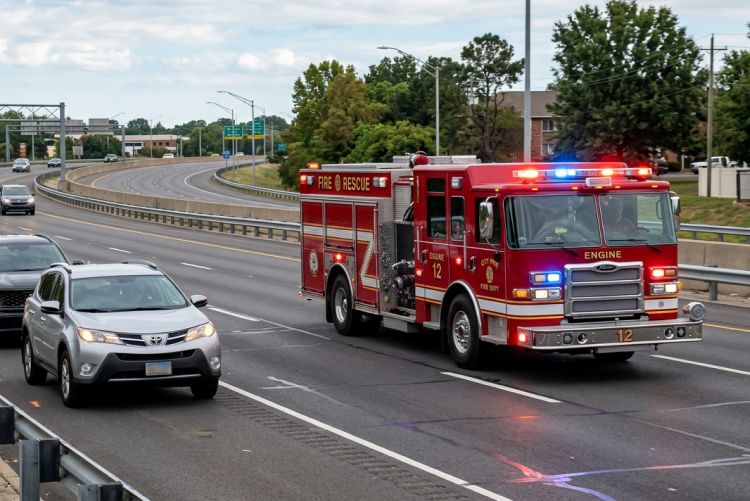
The “Slow Down, Move Over” rule requires drivers to reduce their speed and, if safe to do so, move into the far lane when passing a stopped emergency vehicle with flashing lights. If the speed limit is 80 km/h or higher, you must slow to 70 km/h; if the limit is below 80 km/h, you must slow to 40 km/h.
This “80-40 rule” applies to all vehicles with flashing lights, including police, fire, ambulance, tow trucks, and maintenance vehicles. Moving over provides a critical “buffer zone” for first responders and roadside workers who are often just centimeters away from moving traffic. Failing to follow this rule not only puts lives at risk but also carries significant fines and three penalty points on your driving record.
Are the right-of-way rules for emergency vehicles different for freeways and city streets?
While the legal requirement to yield remains the same, the way you execute it changes based on your speed and the road layout. On high-speed routes like the Trans-Canada or major connectors, the primary goal is to maintain a predictable path while creating a clear lane for the emergency vehicle. Unlike city streets where a full stop is mandatory, freeways require you to move to the right-hand lane and reduce your speed significantly, but avoid coming to a complete stop on the actual driving lanes unless traffic has already stalled.
When you are on urban roads or approaching a stop in cities like Abbotsford, avoid blocking driveways or side streets. If you pull over and stop directly in front of an opening, you might inadvertently trap an emergency vehicle; they may need to make a quick turn or that may have been the route they needed! If you see an emergency vehicle already on the shoulder, the “Slow Down, Move Over” rule is your top priority. Avoid “rubbernecking” or slowing down excessively just to look at the scene, as this often leads to rear-end collisions and traffic congestion that can further delay emergency response times.
Can you receive a ticket for not yielding to an emergency vehicle?
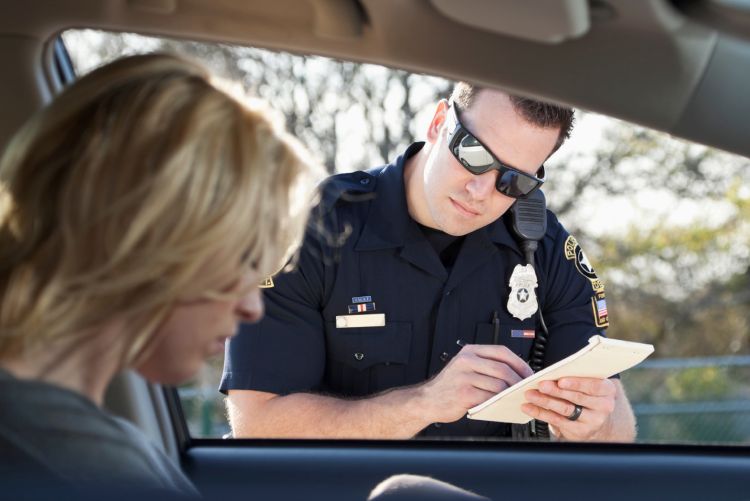
Yes, failing to yield the right-of-way to an emergency vehicle or failing to slow down and move over are serious traffic offenses in BC. Drivers who do not pull over and stop for an approaching siren can face a fine of $109 and three penalty points, while “Slow Down, Move Over” violations can result in a $173 fine and three points.
Beyond the immediate financial cost, these tickets can impact your insurance premiums and your driving record. The province takes these rules seriously because every second counts in an emergency. Being aware of your surroundings and reacting quickly ensures that you stay on the right side of the law and, more importantly, that help arrives where it is needed as fast as possible.
What are common misconceptions about emergency vehicle road rules?
A common misconception is that you must always pull over to the right regardless of the road type. On a divided highway where there is a physical median—such as a concrete barrier or a wide grass strip—you do not need to pull over or stop if the emergency vehicle is traveling in the opposite direction, though you should still remain alert. However, on undivided roads, traffic in both directions must pull over and stop.
Another myth is that it is safe to follow an emergency vehicle closely to get through traffic. In reality, BC law specifically prohibits following a fire truck responding to an alarm within 150 meters. While this specific distance is a legal requirement for fire apparatus, maintaining that same 150-meter gap for ambulances and police vehicles is highly recommended to give them space for sudden stops or turns. By maintaining a respectful distance and following the established rules, you contribute to a safer environment for everyone involved in an emergency situation.
–
Navigating the road when an emergency vehicle appears does not have to be a high-stress event. Once you know the right maneuvers, drivers can provide the clear path that first responders need. Whether you are encountering the “80-40 rule” on the highway or navigating a busy intersection, staying calm and predictable is the best way to support those who are working to keep our communities safe.
If you would like to learn more about staying safe on BC roads, we invite you to read our other guides on 5 Best Practices for Safe Freeway Driving and our Speed Limits in BC: A Driver’s Guide.

Focused on supporting the people behind the wheel and sharing their knowledge. As Valley Driving School's Instructor Supervisor, I support scheduling and the day-to-day needs of our Car Instructors from Burnaby to Hope, and am proud to bring our collective road wisdom online.
Related Articles
Drivers Guide to Night Driving
No matter how sharp your vision is, driving at night can pose challenges for all drivers. Check out these tips to help when you’re driving at night.
Back To School: Playground & School Signs
Ready for back-to-school traffic in BC? Brush up on school zone signs and playground rules to keep everyone safe!
Drivers Guide to Hand Signals
Want to stay safe when electronic indicator lights aren't an option? We've got the info for knowing and using hand signals so you're prepared!
