
Understanding High-Risk Driver Premiums in BC
For many people in Canada, a car is a necessity. The sheer size of the country and the way communities are spaced out, especially in the Lower Mainland, where commutes might stretch from Abbotsford to Vancouver, means driving is often the most practical way to travel. Whether you are a new driver learning the ropes or a senior who’s had years of experience, operating a motor vehicle is a privilege, not a right. When drivers exhibit high-risk behavior, that privilege can come with significant financial consequences.
Statistically, drivers who accumulate tickets and convictions for moving violations are more likely to be involved in crashes than other drivers. To manage the higher financial risk these drivers represent, the system in British Columbia requires high-risk drivers to pay additional premiums. These are managed through two programs, which are often confused with one another: the Driver Penalty Point (DPP) Premium and the Driver Risk Premium (DRP). This applies to all drivers, whether they are maneuvering a passenger vehicle, a larger truck, or towing a travel trailer.
What is the difference between the Driver Penalty Point Premium and the Driver Risk Premium?
It is important to understand that while both programs address high-risk driving, they function separately. If a driver incurs convictions that trigger both programs in the same year, they will only be billed once, for the program that results in the higher premium amount.
Driver Penalty Point (DPP) Premium
The DPP premium addresses the accumulation of penalty points from various traffic offences under the Motor Vehicle Act (MVA).
- Trigger: It is based on the total number of penalty points a driver accumulates over a one-year assessment period.
- Offence Examples: These points are assigned to offences like speeding, failing to yield, running a red light, or improper turns.
- The Threshold: A driver is billed a DPP premium if they collect four or more points during their one-year assessment period.
Driver Risk Premium (DRP)
The DRP targets more serious and frequent instances of high-risk behavior, going beyond simple accumulated points.
- Trigger: It is based on a review of convictions over a three-year assessment period. A single serious conviction can result in a DRP bill in each of the three years it is on your record.
- Offence Examples: Convictions that lead to a DRP include:
- One or more driving-related Criminal Code convictions (e.g., impaired driving).
- One or more 10-point MVA convictions.
- One or more excessive speeding convictions.
- Two or more roadside suspensions or prohibitions.
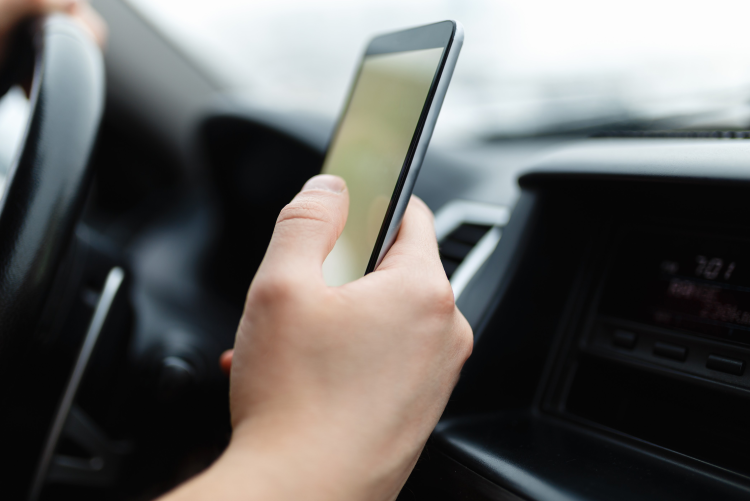
- Two or more convictions for using an electronic device while driving over a three-year period.
How do you calculate the Driver Penalty Point Premium?
The DPP is calculated annually based on a driver’s record. While penalty points stay on your driving record for five years, they are only used once to calculate your DPP premium.
The Assessment Process
The assessment is done approximately one month before your assessment date, which is typically your birthday. The bill covers driving convictions received during the 12-month period ending five months prior to the assessment date. It may also include older convictions that have only recently been recorded on your driving record.
Point-to-Dollar Conversion
Points are assigned based on the severity of the offense. For instance, common offences like speeding usually carry 3 points, while distracted driving now carries 4 points.
The difference between paying nothing and facing a bill is often minimal, as demonstrated by the four-point threshold:
- 3 points (e.g., one speeding ticket) = Nil premium.
- 4 points (e.g., one distracted driving ticket) = $214 premium.
- 6 points (e.g., two 3-point speeding tickets in the assessment period) = $367 premium.
The cost increases substantially as points accumulate, ranging up to $29,376 for 50 or more points.
How do you calculate the Driver Risk Premium?
The DRP is imposed on drivers who demonstrate the highest level of risk on the road. The three-year scan period is a key aspect of the DRP, meaning a single serious conviction can impact your billing for multiple years.
Severity and Billing
The DRP premium is calculated based on the number and type of high-risk convictions you have. Unlike the DPP, you are billed for each applicable category of conviction (e.g., if you have both an excessive speeding ticket and two roadside prohibitions, the premiums for both apply).
The costs associated with a DRP conviction are significant and immediately signal a high-risk designation. For example:
- One Criminal Code conviction (e.g., impaired driving) results in a minimum annual premium of $1,108.
- One excessive speeding conviction results in a minimum annual premium of $392.
This means a single serious conviction can result in a bill that arrives on your assessment date every year for up to three years. Imagine a driver receiving a conviction in Vancouver for impaired driving; they would pay a minimum of $1,108 annually, totaling over $3,300 over three years, not including the original fine or any related legal costs.
How can you reduce or eliminate Driver Penalty Premiums?
One of the most important facts to know about both the DRP and DPP premiums is that they are completely separate from your regular Autoplan insurance. They are debt attached to your driver’s licence, and you will be billed even if you do not own or insure a vehicle.
While these premiums can be incredibly costly, there are two primary ways to reduce or eliminate the charge:
- Voluntary Surrender of Licence: You can eliminate the premium by voluntarily surrendering your driver’s licence for the entire billing period. The billing period starts the day after your assessment date and ends on your next assessment date. For DRP convictions, this may need to be done annually for two or three successive years.
- Reduction Due to Time Off-Road: Your premium may also be reduced if you surrender your licence for at least 30 consecutive days during the billing period, or if you were prohibited from driving for 60 days or more.
You may also be eligible for a refund or reduction if you were unable to operate a vehicle for a minimum of 30 days in a row during the billing period for reasons such as:
- Being incarcerated.
- Being outside of Canada or the United States.
- Living in another province and lawfully holding a licence there.
- Not being able to operate a vehicle for medical reasons.
If you voluntarily surrender your licence, you can have it reissued by visiting a driver licensing office and paying the reduced premium, a reinstatement fee, and/or a renewal fee, provided you do not have outstanding driving prohibitions or other debt to the government.
–
The takeaway here is that the DRP and DPP premiums represent substantial, often recurring, financial penalties for high-risk driving. A little extra focus on defensive driving, following the rules of the road, and avoiding distractions can save you thousands of dollars, significant hassle, and the time required for licence reinstatement. The only certain way to avoid the complication, hassle, and high cost of these premiums is to maintain a thoughtful, careful driving record, which in turn helps to make the roads safer for everyone.
To learn more about maximizing your driving experience and minimizing your costs, be sure to check out our related posts How to Earn a Safe Drivers Discount and How Do Driving Lessons Save You Money.

Related Articles
4 Types of Intersections & How to Navigate Them
Intersections are an important part of driving no matter where you are, but do you know all the different types and the rules for each?
How Car Driving Lessons Make Roads & Drivers Safer
Looking to build lasting confidence behind the wheel? Discover how car driving lessons sharpen observation skills and make BC roads safer for everyone.

Upcoming Changes to the Graduated Licensing Process
ICBC’s Graduated Licensing Program is being updated for 2026: skip the Class 5 road test and complete a 12-month safety period. Learn more about the timelines and next steps.
