
Transfer Your Driver’s Licence to BC: Commercial Licences
Welcome back to the second part of our series on transferring your licence to British Columbia. While the first part of our series focused on personal vehicles and the 90-day grace period, today we are diving into the professional side of driving. Whether you are a long-haul trucker, a transit driver, or looking to drive for a ride-share service, BC has specific standards and some unique geographic challenges that you need to know.
Let’s dive into commercial licensing and the licence transfer process.
COMMERCIAL LICENSING FOR TRUCKS AND BUSES
If you hold a commercial licence from another Canadian province for operating large trucks or buses, including specialized vehicles like dump trucks, fire trucks, or transit buses, you may be able to exchange it, but ICBC will review your driving record to determine if further testing is required. This is not always an automatic administrative exchange; depending on your experience, you may need to complete BC’s Mandatory Entry-Level Training (MELT).
Truck and Bus Licence Transfers
The requirements for transferring a heavy vehicle licence depend on the class of licence and your documented driving experience. Additionally, for all commercial classes (1, 2, and 3), you may also need a BC air brake endorsement if the vehicle you are operating uses an air brake system.
Class 1 (Semi-Trailers): This licence allows you to drive any commercial vehicle, including those with heavy trailers and air brakes. To exchange this directly, you must have held a valid Canadian Class 1 licence for at least 24 consecutive months within the last three years.
Class 2 (Large Buses): If you are moving here to drive a bus seating more than 25 passengers, you may be able to exchange your provincial Class 2 licence. While additional training is not currently required for Class 2 in BC, most buses are equipped with air brakes, meaning you must also pass an air brake knowledge test and a practical air brake assessment.
Class 3 (Large Trucks): This is the standard requirement for vehicles with more than two axles, such as straight dump trucks, garbage trucks, and fire engines. While Class 3 currently does not require additional training, you must still pass a BC road test if your previous licence is not deemed equivalent. If the truck is equipped with air brakes, the air brake endorsement must be added to your Class 3 licence.
The 24-Month Experience Threshold
The primary factor determining if you can transfer directly is the length of time you have held your Canadian Class 1 licence:
24+ Months of Experience: If you have held a valid Canadian Class 1 licence for at least 24 consecutive months within the three years prior to your application, you may be exempt from the MELT program.
12 to 24 Months of Experience: You may be exempt from the full MELT course, but must pass a BC Class 1 road test within two attempts and within 12 months of your application.
Less than 12 Months of Experience: You will be required to complete the full 140-hour BC Class 1 MELT course before you can be licensed.
Special Note for Ontario Drivers
ICBC does have special requirements for drivers transferring from Ontario, because air brake training is not a mandatory component of the Ontario MELT program. ICBC requires these drivers to complete a minimum of 15.5 hours of air brake theory and practical training. To meet this requirement, many drivers enroll in an Ontario Air Brake MELT upgrade course at an approved ICBC facility to ensure they meet local safety standards and can pass the practical air brake assessment.

Mountain Driving Challenges
A major reason for BC’s rigorous testing is the province’s geography, which features steep mountain grades and long descents.
Brake Management: On long descents like the Coquihalla Highway or Rogers Pass, relying solely on service brakes can lead to overheating or fire. Drivers should select the correct lower gear at the top of the hill to allow auxiliary systems, such as engine brakes or retarders, to manage the vehicle’s speed.
Gear Selection: The general rule is to descend a grade in a gear similar to or lower than the one used to ascend it. Service brakes should be kept cool and reserved for emergencies, rather than being used to slow the truck down during a long descent.
BC Pre-Trip Standards
The ICBC road test includes a particularly detailed pre-trip inspection for all commercial classes, touching on the safety and readiness of the vehicle. Even experienced drivers often choose to take professional training to ensure they meet the specific, rigorous standards used by ICBC examiners.
Inspection Report: You must complete and submit a written trip-inspection report as part of your test for any Class 1, 2, 3, or 4 unrestricted licence.
Air Brake Components: The pre-trip includes a detailed air brake inspection. You must demonstrate a comprehensive understanding of the system’s safety limits and may be required to show proficiency in air brake adjustments.
Mechanical Checks: Examiners check for both minor and major defects across tires, steering, and braking systems, following the National Safety Code standards that BC enforces strictly.
Understanding Class 4 Licences for Ride-Sharing and Passenger Transport
If you are moving to BC with plans to drive for a ride-sharing service, operate a taxi, or drive a small bus with less than 25 passengers (including the driver), you will need to obtain a Class 4 commercial licence. Unlike a standard passenger vehicle licence, a Class 4 designation is a professional credential that focuses on the safe transportation of people and requires an elevated level of skill.
In British Columbia, there are two distinct types of Class 4 licences. The specific one you need depends entirely on the seating capacity of the vehicle you intend to drive.
Class 4 Restricted
This licence is designed for small-scale commercial passenger transport. It is the minimum legal requirement for anyone looking to work in the following roles:
Ride-Sharing: Drivers for companies like Uber or Lyft must hold at least a Class 4 restricted licence.
Taxis and Limousines: Standard taxi and limo operations fall under this category.
Ambulances: Emergency medical transport drivers require this designation; though, many employers will be looking for a Class 4 Unrestricted.
Small Shuttles: Any vehicle carrying up to 10 people, including the driver, is covered by a restricted licence.
Class 4 Unrestricted
If your career path involves larger vehicles, you will need to upgrade to an unrestricted licence. This allows you to drive vehicles with a total seating capacity of up to 25 people, including the driver. Common examples include:
Small Buses: Smaller school buses and special activity buses.
Shuttle Vans: Hotel or airport shuttles that seat more than 10 passengers.
HandyDART: Vehicles used specifically to transport people with disabilities.
Notably, an unrestricted Class 4 licence includes all the privileges of the restricted version, meaning you can still drive for ride-sharing or taxi services with this higher designation.
The Path to a Class 4 Licence
The requirements for both restricted and unrestricted licences share many similarities, and the distinction between the two often comes down to the vehicle used for the road test.
Eligibility: You must be at least 19 years old and hold a full privilege Class 5 licence. If you’re transferring your licence directly, you must have an equivalent out-of-province licence.
Knowledge Test: You must pass a specialized commercial knowledge test before you can book a road test.
Medical Fitness: Because you are responsible for the safety of others, you must pass a medical fitness exam.
Road Test & Pre-Trip: To get an unrestricted licence, the road test must be taken in a larger vehicle that seats at least 11 passengers (including the driver). If you test in a vehicle that holds less than 11 passengers, you will be issued a Class 4 restricted licence.
For those looking to enter the ride-sharing industry, be aware that companies like Lyft and Uber often have their own additional criteria, such as a minimum age of 25 and a clean driving record with fewer than four penalty point offences in the last two years.
Preparing for Your ICBC Appointment
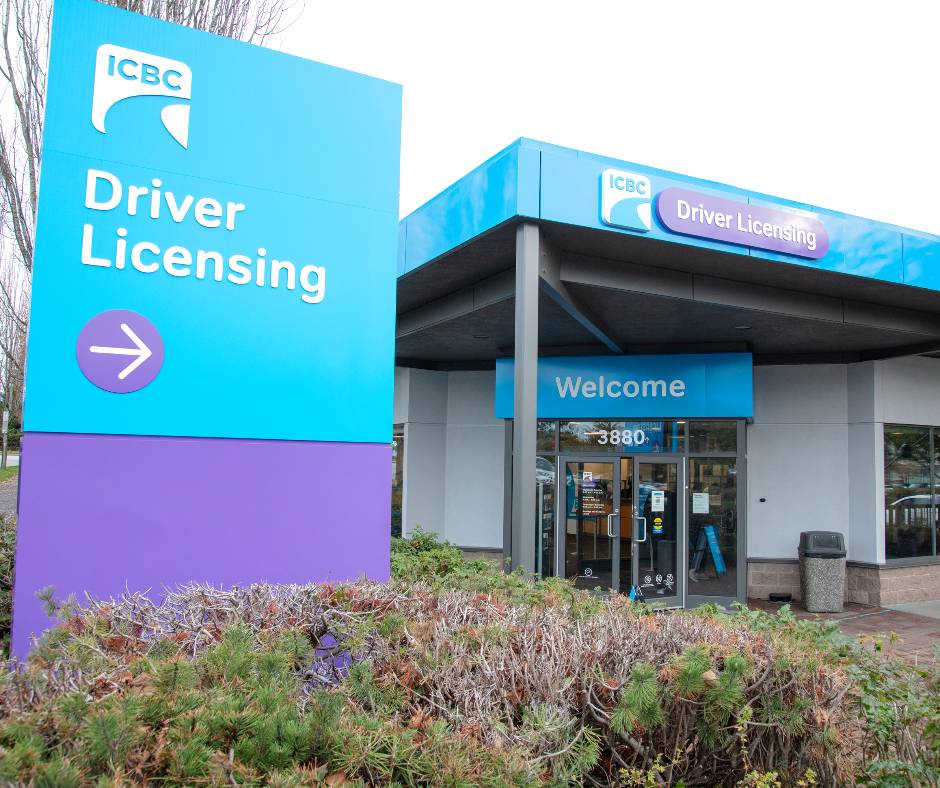
Booking a commercial or professional licensing appointment is a bit more involved than a standard transfer. Because Class 1-4 tests cannot be booked online, you must call the ICBC driver licensing information line to schedule your road test.
Required ID: Bring one primary and one secondary piece of ID.
Commercial Fees: Be prepared for specific testing fees, such as $40-$60 for the road test and a $28 medical processing fee for Class 1–4 applications.
Medical Exam: Most commercial transfers require you to pass a medical fitness exam. After you successfully pass your commercial road test, ICBC will provide you with a Driver Medical Examination Report (DMER). You will then have 45 days to have this form completed by a physician and submitted to RoadSafetyBC.
Proof of Experience: As with personal licences, bring an original driver’s abstract to prove you meet the 24-month experience threshold.
–
Navigating the transition to a professional driving career in British Columbia is more than just a paperwork exchange; it is a commitment to mastering some of the most challenging driving conditions in North America. Whether you are descending the steep grades of the Coquihalla in a semi-trailer or safely navigating a transit bus through the busy streets of the Lower Mainland, your expertise is what keeps BC’s economy and people moving safely.
By handling your licence transfer early, preparing for the rigors of the BC pre-trip inspection, and ensuring you meet the 24-month experience threshold, you set yourself up for long-term success. British Columbia offers incredible opportunities for skilled drivers, and with the right preparation, you’ll be ready to take them on.
Welcome to the BC driving community. We look forward to seeing you out on the road, staying safe, and enjoying the view!
If you’re ready to take the next step in your professional driving career, explore our detailed Guide to Getting Your BC Air Brake Endorsement and Securing Sponsorship for Class 1 Truck Driver Training.
Related Articles
Guide to the Online ICBC Knowledge Tests
Think back to the day you went to get your learner’s licence. Remember sitting in that crowded office, flipping through a paper guidebook, and feeling...

6 Tips to Prepare for the Class 5/7 Learners Test
If you’re itching to get behind the wheel of a car in the province of British Columbia, you’ll first have to successfully complete the ICBC knowledge test. The class 5/7 knowledge test, issued by ICBC, is the first stage in attaining your licence. In this post, we’ll discuss what to expect on that test and some ways to help you prepare!
BC Digital Licensing is Coming: What You Need to Know
We're looking at the modernization of BC's licensing system under the Bill 6 Motor Vehicle Amendment Act, including the shift toward online licence renewals.
