
How Truck Driving Lessons Make Roads & Drivers Safer
Driving past a massive semi-truck on a rain-slicked stretch of freeway can make even experienced drivers hold their breath for a second. When a rig carries thousands of kilograms, safe handling requires advanced driving and observation skills, as well as meticulous pre-trip inspections. Professional truck driving lessons build the practices that keep both commercial operators and surrounding commuters safe on every journey.
In part two of our road safety series, we are looking at how professional commercial driver training can shape safety across our highway network. We will cover how Instructors build advanced visual observation routines, why hands-on pre-trip equipment checks protect everyone on the road, how strategic route planning prevents dangerous traffic bottlenecks, and why maintaining mental composure in the cab makes our shared roads safer for all.
How do a truck driver’s observation skills make highways safer?
Strong observation skills make highways safer by allowing commercial drivers to identify hazards 15 to 20 seconds early, giving them ample distance to adjust speed and position. Professional training for class 1 MELT, class 2 buses, and class 3 trucks builds these habits by teaching drivers to scan mirrors and horizons continuously, which prevents sudden braking and protects surrounding vehicles from unexpected lane shifts.
When you are steering a heavy vehicle that takes double or triple the stopping distance of a standard passenger car, looking at the tailgate directly in front of you is a recipe for trouble. Instructors coach commercial drivers to sweep their eyes across the horizon and read traffic patterns well ahead. On busy corridors around Surrey, where merging traffic and sudden slowdowns happen in seconds, this long-range vision gives drivers time to ease off the accelerator early rather than slamming on the brakes. Instructors also teach systematic mirror checks to monitor the massive blind spots along the sides and rear of the trailer. Keeping tabs on surrounding lanes ensures the driver knows exactly where smaller passenger vehicles are located before making any moves.
How do daily pre-trip inspections build a strong foundation for road safety?
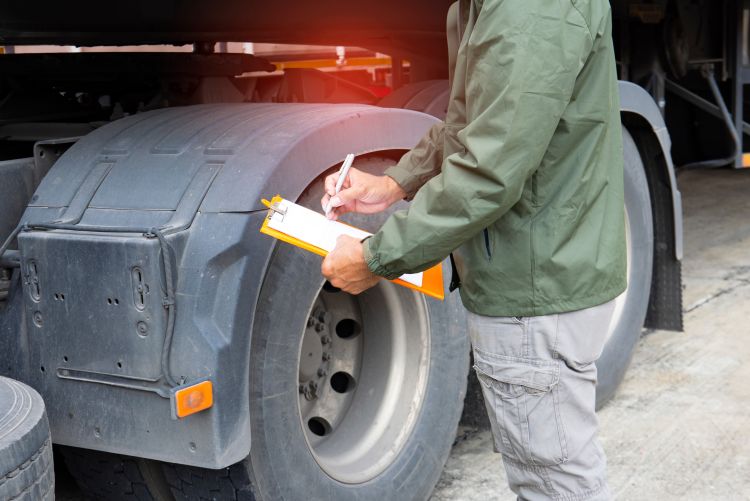
Thorough pre-trip inspections catch mechanical issues before a commercial rig enters traffic. Professional training guides drivers through all the components on their vehicle; including checking the air brake systems, measuring tire pressure, inspecting steering components, and verifying load security. Catching loose cargo or minor brake leaks during daily checks prevents dangerous equipment failures on roadways and keeps surrounding drivers out of harm’s way.
Safety begins well before the engine turns over, starting on the pavement with a flashlight and an inspection checklist. During commercial training, including the class 1 Mandatory Entry-Level Training (MELT) programs, students learn that a loose tie-down strap or an underinflated tire can quickly turn into a major highway hazard. Checking air brake lines for pressure drops, verifying that coupling mechanisms are locked tight, and testing light connections are daily routines that cannot be rushed. Whether a truck is preparing for a long highway haul or making local deliveries on backroads near Langley, a complete pre-trip inspection guarantees that every mechanical system meets strict safety standards. Catching a worn brake pad in the yard prevents a mechanical failure in front of a school bus, delivery van, or busy traffic.
How does route planning create smooth, confident trips?
Strategic trip planning reduces behind-the-wheel stress by removing unexpected surprises along commercial routes. Driving Instructors show operators how to check weather advisories, confirm overhead bridge clearances, map truck-approved corridors, and schedule mandatory rest stops. Proper pre-route preparation eliminates last-minute lane changes, missed exits, and tight turning mistakes in congested municipal areas.
Taking a massive tractor-trailer down a narrow street with a low-clearance bridge is every truck driver’s nightmare, but careful pre-trip preparation prevents those high-stress mistakes. Instructors show drivers how to review municipal truck routes, account for steep mountain grades, and double-check height restrictions before pulling out of the yard. Moving through growing urban hubs like Burnaby requires a clear plan for every turn and merge point. When a driver knows their exact route, they are not searching for street signs or making sudden, panicked lane changes across three lanes of traffic. Good planning also involves scheduling rest breaks to avoid driver fatigue, keeping operators sharp and ready for sudden weather shifts or unexpected road construction.
How does professional training build calm and predictable habits behind the wheel?
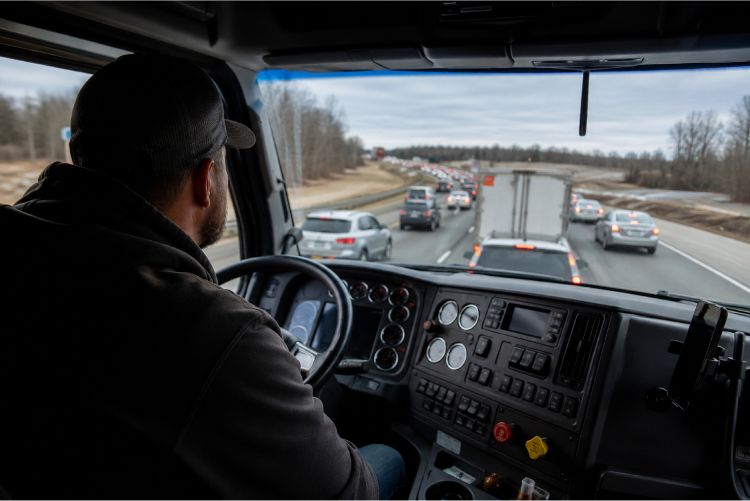
Driving Instructors build composure by teaching calm, methodical habits that keep commercial vehicles moving predictably in busy traffic. Professional training emphasizes generous following distances, smooth vehicle management, and early signaling. By learning to manage fatigue, anticipate unpredictable passenger vehicles, and resist aggressive reactions, drivers remain patient and in control during peak traffic delays.
Operating a multi-ton commercial vehicle in congested conditions requires a steady, disciplined mindset. It can be frustrating when smaller cars cut into a truck’s safe stopping distance or make sudden lane changes in front of a rig. Instructors train operators to accept these everyday moments without taking them personally or reacting impulsively. Staying calm means preserving a protective buffer zone, letting impatient drivers pass, and managing momentum smoothly. Ultimately, this emotional discipline protects everyone sharing the roadway—from ride-share drivers weaving through traffic to seniors and cyclists navigating city streets.
How does commercial truck driver training foster cooperative safety for all road users?

Commercial truck driver training fosters cooperation on the road by teaching operators to actively manage the space around their vehicles, creating a safer environment for everyone. By training drivers to anticipate the movements of smaller vehicles, signal well in advance, and leave ample clearance for tight turns, professional instruction ensures that truck operators can safely share our highways with passenger cars, buses, and cyclists, effectively minimizing blind-spot risks.
When commercial drivers prioritize this proactive approach, the entire transportation network becomes more predictable and secure. Instructors emphasize essential habits—such as managing right-hand turns without encroaching on lanes and maintaining extra space near transit stops—that allow traffic to flow more smoothly. Ultimately, this focus on cooperative safety transforms the relationship between heavy commercial transport and other road users, including passenger vans, fostering a culture of mutual respect and confidence on shared roads.
–
Professional truck driving lessons do far more than help operators pass a commercial road test; they establish a higher standard of safety for our entire transportation network. Proper observation practices, thorough equipment inspections, smart route planning, and calm decision-making turn heavy commercial transport into steady, reliable partners on our highways.
To learn more about taking professional truck driving lessons, check out our blogs Pre-Trip Inspection Guide for Commercial Drivers and Securing Sponsorship for Class 1 Truck Driver Training.

Focused on supporting the people behind the wheel and sharing their knowledge. As Valley Driving School's Instructor Supervisor, I support scheduling and the day-to-day needs of our Car Instructors from Burnaby to Hope, and am proud to bring our collective road wisdom online.
Related Articles

Funding Options for the Class 1 MELT Program
Interested in earning your Class 1 licence but worried about MELT tuition? Explore key grants, sponsorships, and flexible payment plans to fund your training.
Finding Work as a School Bus Driver
Looking for job options after passing your class 2 road test? Uncover how to build a flexible, year-round driving career in BC.
How You Can Reduce The Cost Of Truck Driving School
Eager to launch your truck driving career without breaking the bank? Find out how flexible payment options and grants keep training within reach.
