
How Motorcycle Riding Lessons Make Roads & Riders Safer
Professional motorcycle training empowers you to take proactive command of your road presence, replacing uncertainty with the skill and confidence needed to navigate any traffic environment. Instead of reacting to the movements of others, you learn to master your visibility and lane positioning, ensuring you are seen and respected by every driver. By enrolling in a complete motorcycle program, you gain the expert techniques required to ride with authority, transforming your experience on two wheels into a journey of absolute control and poise.
In this post, we will cover how professional riding lessons help you maintain visibility, why predictable riding creates a safer environment for everyone, how to set up safe space buffers around cars and heavy commercial transport, and how Instructors teach students to handle sudden road hazards smoothly.
How do motorcycle lessons help riders stay visible in traffic?
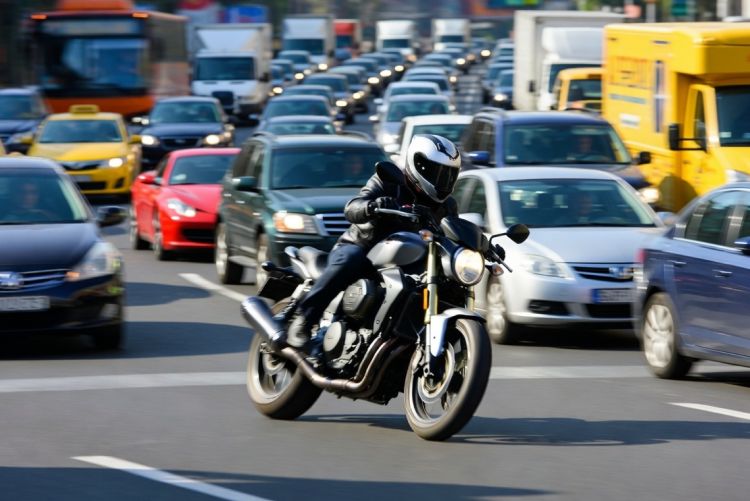
Motorcycle lessons combine in-class theory with supervised traffic riding to prepare riders for real-world driving conditions. Working closely with Instructors in small group settings, students learn safe riding practices and gain the practical experience needed to navigate active traffic, recognize road hazards, and ensure they remain clearly visible to surrounding drivers.
Sitting in the middle of a lane can reduce your visibility on two wheels. Instructors teach riders how to pick the left or right third of a lane based on surrounding conditions. Moving to the left third helps you show up in the side mirror of the car ahead, while shifting to the right third gives you better sightlines around a delivery or passenger van. When approaching multi-lane intersections, changing your position slightly within the lane draws the eye of drivers waiting to make left turns across your path. Taking professional lessons builds this constant awareness, so picking a visible lane position becomes second nature.
Why does predictable riding keep everyone safer on shared roads?
Predictable riding keeps our roads safer by providing other motorists with the information and time they need to anticipate your movements and make informed decisions. By maintaining smooth throttle control, steady pacing, and clear signals, you help surrounding drivers react calmly, reduce the risk of sudden stops, and keep traffic flowing predictably for everyone.
Traffic moves best when everyone knows what to expect next. Motorcycles are light, quick, and nimble, but other vehicles, especially heavy commercial trucks and transit buses need more time and space to slow down or maneuver. When a rider makes sudden lane changes or rapid speed adjustments, drivers in heavier vehicles cannot react as quickly. Professional driving lessons emphasize clear signaling at least three to four seconds before making any turn or lane shift. On multi-lane routes near Surrey, where cars and big rigs merge constantly, holding a steady speed and making gradual movements gives surrounding traffic the time needed to adjust safely. This consistency helps new drivers and seniors judge distance accurately, and lessens the guessing involved when figuring out what riders are likely to do.
How do safety buffer zones protect riders and surrounding vehicles?
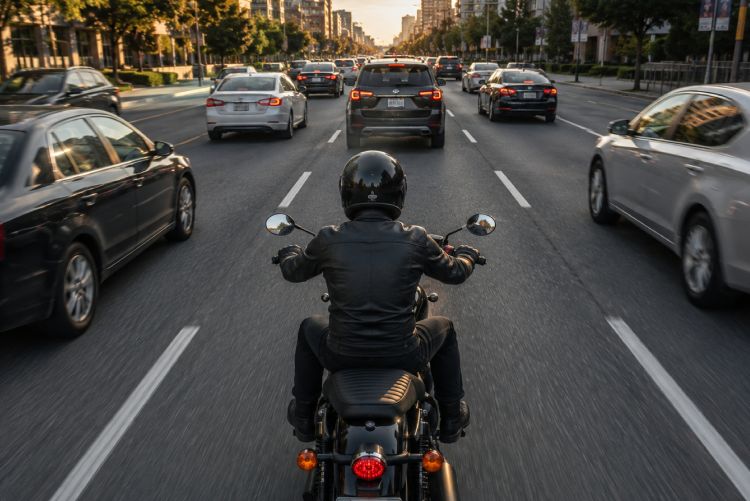
Safety buffer zones protect riders and surrounding vehicles by providing extra stopping distance and clear escape routes. Instructors teach students to keep at least a 2–3 second following gap in dry conditions, increasing to 4 seconds or more when traffic is heavy or the roads are wet, leaving room for emergency maneuvers when traffic slows unexpectedly.
Motorcycles stop differently than cars. While a motorcycle is lighter, it relies on two small patches of rubber for traction, requiring clean technique to stop quickly without locking the tires. Following too closely behind a passenger van or commercial truck cuts off your view of the pavement ahead, leaving less time to react if that vehicle suddenly swerves around a pothole or dropped cargo. Professional training teaches riders to maintain a cushion of space on all sides. When coming to a stop at red lights or at stop signs on local backroads near our Career Centre in Langley, Instructors show riders how to stop a full car-length back, angled toward an open escape path in case a vehicle behind fails to slow down in time. Maintaining these space buffers gives everyone on the road a wide margin.
How do Motorcycle Instructors teach riders to manage unexpected road hazards?
Motorcycle Instructors teach hazard management through in-person theory and hands-on, closed-circuit practice. Working in small groups, students master clutch control, counter-steering, and emergency braking. This practical training gives riders the muscle memory needed to handle unexpected obstacles and slippery road surfaces safely in active traffic.
A sudden rain shower or loose gravel on the pavement can catch any rider off guard. Grabbing a handful of front brakes out of panic can lock up the front tire and cause a slide. In a structured program, you start in a closed parking lot practicing smooth throttle control, proper braking, and counter-steering. Once you move into supervised traffic rides around areas like Langley, Instructors show you how to spot low-traction hazards early, such as wet crosswalk paint, metal drain covers, or loose debris. Learning to keep your inputs smooth and stay calm behind the handlebars gives you the practical judgment needed to navigate everyday road hazards safely.
How does rider training build a safer community for all road users?
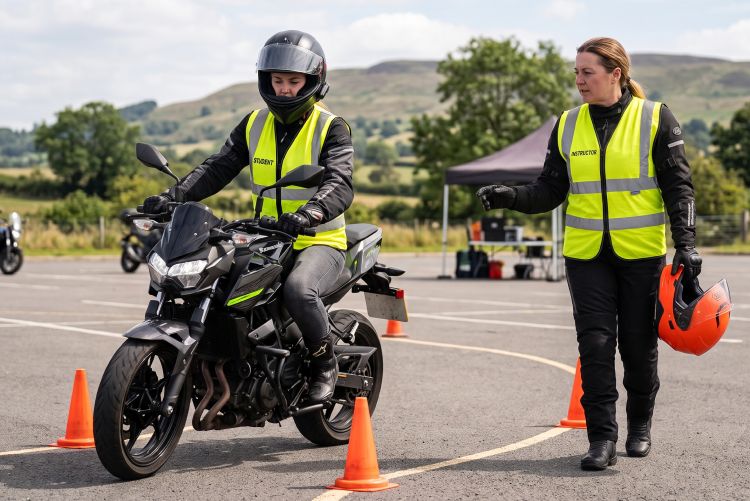
Professional rider training makes our streets safer by teaching riders how to read traffic, manage their lane position, and cooperate with everyone on the road. When you know how to stay visible, signal your intent early, and maintain generous space cushions, you help traffic move smoothly, allowing every driver nearby to travel with confidence.
Well-trained riders create a positive ripple effect for everyone else. When riders actively manage their space, stay out of truck blind spots, and signal their intentions early, close calls drop significantly. Professional training transforms riding from a solo activity into a cooperative habit, where riders actively contribute to smoother traffic flow and safer streets for everyone travelling across British Columbia.
–
Professional motorcycle riding lessons do far more than help you pass a road test. They equip you with the spatial awareness, hazard management skills, and smooth vehicle control needed to ride confidently alongside all types of traffic. By focusing on visibility, predictability, and smart space buffers, trained riders make local streets safer for everyone sharing the road.
At Valley Driving School, we are dedicated to helping riders of all experience levels build habits that last a lifetime. To learn more about two-wheeled safety and equipment, check out our blogs Motorcycle Safety: Standing Out On The Road and 3 Essentials for Motorcycle Safety Gear.

Focused on supporting the people behind the wheel and sharing their knowledge. As Valley Driving School's Instructor Supervisor, I support scheduling and the day-to-day needs of our Car Instructors from Burnaby to Hope, and am proud to bring our collective road wisdom online.
Related Articles
Riders Guide to Three-Wheel Motorcycle Licensing in BC
Learn how to get a three-wheel motorcycle licence in BC: ICBC knowledge test, Class 6L or 8L learner, MST skills test, road test, and key vehicle rules.
Riders Guide to Motorcycle Batteries
Choose the right motorcycle battery and extend its life with type comparisons, warning signs, charging tips, and winter storage steps for riders in BC.
Women’s Motorcycle Gear Guide: Finding the Right Fit
The number of women on two wheels is growing, and with that comes a wider range of gear designed with the female rider in mind. Gone are the days of having to settle for a men's jacket in a smaller size, or a helmet that doesn't quite fit your head shape.
