
Riders Guide to Three-Wheel Motorcycle Licensing in BC
Imagine yourself cruising down the Lougheed Highway, from Pitt Meadows to Mission, as the sun sets behind the mountains. You have the wind in your face and the open-road freedom of a motorcycle, but when you pull up to a red light in Maple Ridge, you don’t have to put your feet down. There is no balancing act and no heavy leaning – just the stable, planted feel of three wheels on the pavement.
The landscape of motorcycling in British Columbia is changing as more riders look toward the stability and comfort of these vehicles. Whether you are interested in a traditional trike or a modern tilting machine, understanding the legal path to the road is the first step. Navigating these regulations ensures that you are properly insured and qualified to operate these unique machines safely.
Do you need a licence for a three-wheel motorcycle in BC?
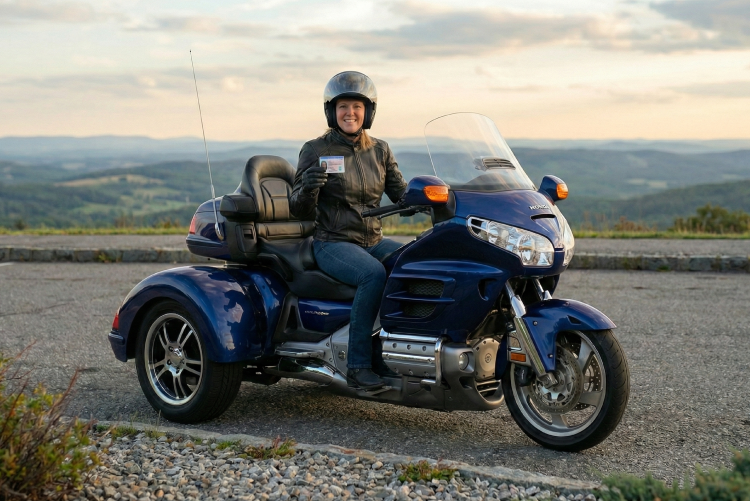
To operate a three-wheel motorcycle in British Columbia, you must hold a valid motorcycle driver’s licence or learner’s permit. The first step in the licensing process is to successfully complete a motorcycle knowledge test to obtain a learner’s licence before you can begin training on the road.
While some jurisdictions allow drivers to operate three-wheelers with a standard passenger vehicle licence, British Columbia requires specific motorcycle certification. Riders must ensure their vehicle meets the definition of a motorcycle under the Motor Vehicle Act. This usually involves a seat you straddle and a handlebar for steering. If the vehicle has automotive-style seating and foot pedals, the licensing requirements may differ, but most trikes and Spyders fall under the motorcycle category. Once you have obtained your learner’s permit, you can practice on a three-wheel vehicle provided you follow all ICBC learner restrictions, such as riding within sight of a qualified supervisor.
What are the vehicle classifications for three-wheel motorcycles?
Three-wheel motorcycles are classified based on engine displacement and power output. A standard motorcycle has a gasoline engine exceeding 50cc or an electric motor exceeding 1.5kW. Vehicles that fall at or below these thresholds are classified as Limited Speed Motorcycles (LSMs) and are subject to different licensing and road usage rules.
The technical specifications of your vehicle determine where and how you can ride. Most modern three-wheelers used for touring, such as the Can-Am Spyder, have engines or electric motors well above the 50cc or 1.5kW threshold, meaning they require a full motorcycle licence. Limited Speed Motorcycles (LSMs), often referred to as mopeds or small scooters, have a maximum attainable speed of 70 km/h and are generally restricted from using high-speed provincial highways. It is also worth noting that adding a sidecar to a two-wheel motorcycle does not automatically turn it into a “three-wheel motorcycle” for testing purposes in the same way a purpose-built trike does.
How to get a three-wheel motorcycle licence in BC?
Obtaining a three-wheel motorcycle licence involves passing a knowledge test, a motorcycle skills test (MST), and a final road test. The specific path you take depends on whether you receive a Class 6L or 8L learner’s licence, which is determined by your current driving experience and licence class.
The process begins at an ICBC driver licensing center. If you are already a full-privilege driver (Class 1-5), you will receive a 6L licence. If you are a new driver or still within the Graduated Licensing Program (Class 7L or 7N), you will receive an 8L. This distinction is important because it dictates your waiting periods: 6L holders can take their skills test after 14 days, while 8L holders must wait 30 days. Both permits allow you to practice on the road with a qualified supervisor who holds a full Class 6 licence. Note that for 8L holders, this supervisor must be at least 25 years old, whereas 6L holders only require a supervisor aged 19 or older. In either case, the MST is a critical hurdle; passing it allows you to remove the 60 km/h speed restriction and the requirement for a supervisor.
Riders that hold an 8L licence are also subject to additional restrictions.
What is a three-wheel motorcycle licence restriction (Restriction 51)?
Restriction 51 is a condition placed on a Class 6 or 8 licence when the road test is completed using a three-wheel motorcycle. This restriction limits the holder to operating three-wheeled motorcycles only.
Choosing to test on a three-wheeler is a practical path for many riders who do not intend to ride traditional motorcycles. However, it is important to understand the long-term implications. While you do not need to retake the written knowledge test if you already hold a Restricted Class 6 or 8, you will need to re-qualify through a practical examination. You must book a road test on a two-wheel motorcycle (typically one over 200cc to avoid further passenger restrictions) and demonstrate the balance and leaning skills that are unique to two-wheeled operation. Once you pass this second road test, ICBC will remove Restriction 51, granting you the privilege to ride both two-wheel and three-wheel vehicles.
Can you get a three-wheel motorcycle licence online?
While you can access study materials, like practice tests and the Learn to Ride Smart guide, and book your appointments online, you cannot obtain a three-wheel motorcycle licence online. ICBC requires all applicants to appear in person for the knowledge test, the motorcycle skills test, and the final road test. Physical demonstration of bike control is a mandatory part of the licensing process.
Preparation using online study materials is helpful for the theory portion of the licensing journey. The practical application of these rules must be witnessed by an examiner to ensure you can safely navigate traffic and manage the unique physics of a three-wheeled machine.
How can you prepare for the three-wheel motorcycle road test?
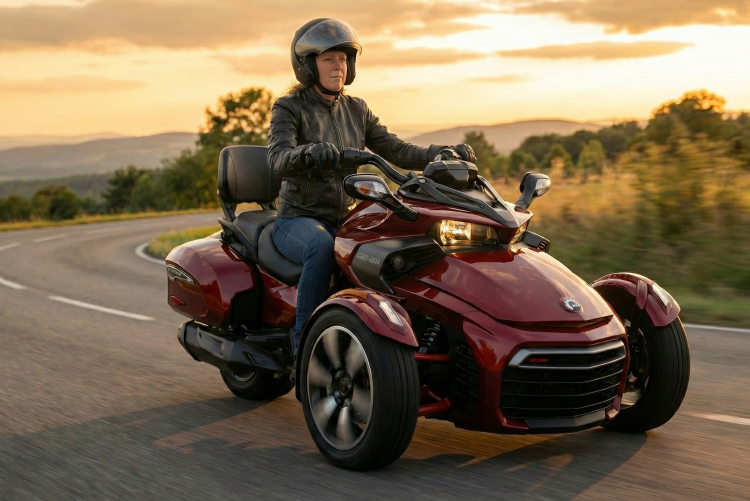
Preparation for the road test focuses on observation, lane positioning, and speed control. Examiners watch for your ability to maintain a safe “cushion of space” and your use of signals. Because three-wheelers are wider than bicycles, you must demonstrate an awareness of your vehicle’s total width when positioning within a lane.
When road testing, you will be expected to navigate various traffic environments, including intersections and merges. Unlike a two-wheel test, you do not need to demonstrate balance at a stop, but you must show that you understand how a three-wheeler tracks through corners. Because these vehicles do not lean like traditional bikes, your steering input and body positioning are evaluated differently. Consistent shoulder checks and 360-degree awareness remain the most important factors for a passing grade.
Get on the road with a qualified supervisor to fit in plenty of hands-on practice. If you don’t have a qualified supervisor, find a professional to provide some tips and coaching to get you road test ready!
–
Obtaining your three-wheel motorcycle licence in British Columbia is a structured process designed to ensure safety for all road users. By understanding the specific requirements of ICBC and the implications of Restriction 51, you can choose the licensing path that best fits your riding goals. With the right preparation and training, the transition to three wheels offers a stable and enjoyable way to explore the roads of the Fraser Valley.
For more information on unique riding setups and navigating BC’s licensing landscape, be sure to read our other posts, Motorcycle Sidecar Adventures and Restrictions and Endorsements on Your BC Licence.
Related Articles
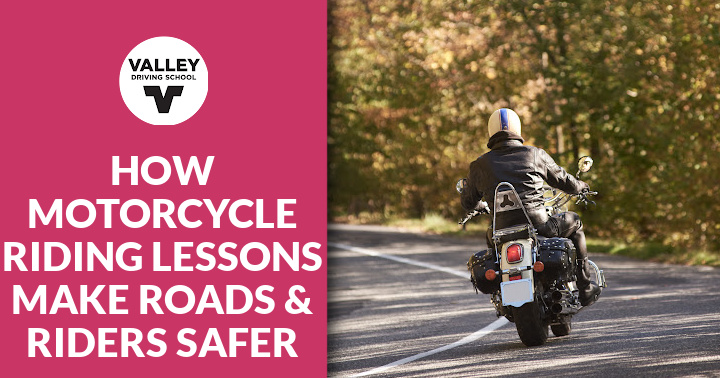
How Motorcycle Riding Lessons Make Roads & Riders Safer
Ready to take command of your motorcycle journey? Uncover how taking professional rider training transforms the experience and keeps everyone protected.
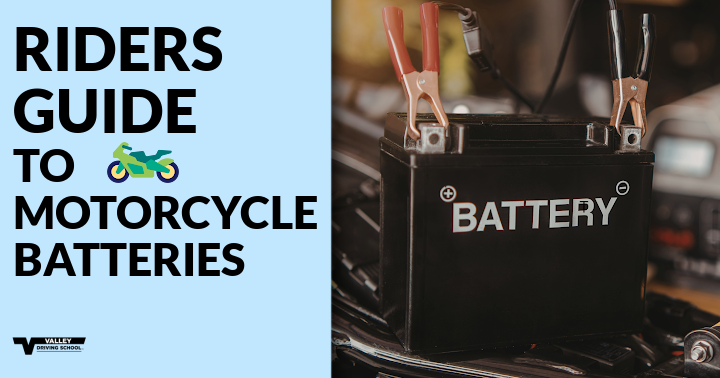
Riders Guide to Motorcycle Batteries
Choose the right motorcycle battery and extend its life with type comparisons, warning signs, charging tips, and winter storage steps for riders in BC.
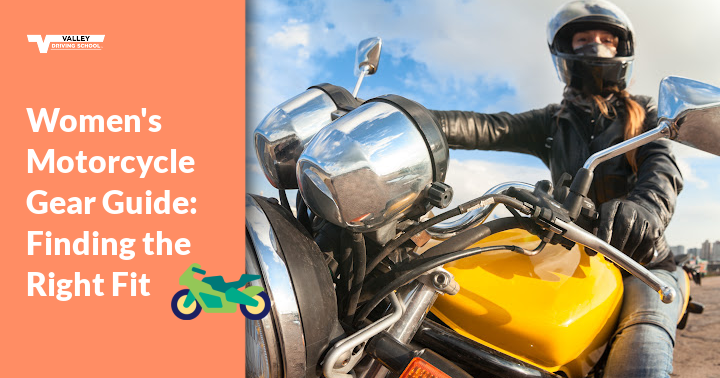
Women’s Motorcycle Gear Guide: Finding the Right Fit
The number of women on two wheels is growing, and with that comes a wider range of gear designed with the female rider in mind. Gone are the days of having to settle for a men's jacket in a smaller size, or a helmet that doesn't quite fit your head shape.
