
Riders Guide to Motorcycle Batteries
While the battery is one of the smallest components on your bike, it plays an important role in ensuring every trip begins without a hitch. Imagine if you and a friend have spent the week planning a trip from Surrey to Harrison Hot Springs. You’ve both finally earned your motorcycle licence through hard work and practice, and the weather is finally cooperating for your first big ride. You gear up, pull the bikes out of the garage, and prepare for the ride, only to find a hollow click or total silence when you press the starter.
Proper motorcycle battery maintenance is a combination of choosing the right equipment and establishing a consistent routine to keep the electrical system healthy. This week, we’re exploring the ins and outs of motorcycle battery usage and maintenance. Understanding these basics helps you avoid unexpected delays so you can focus on the ride ahead.
What are the different types of motorcycle batteries?
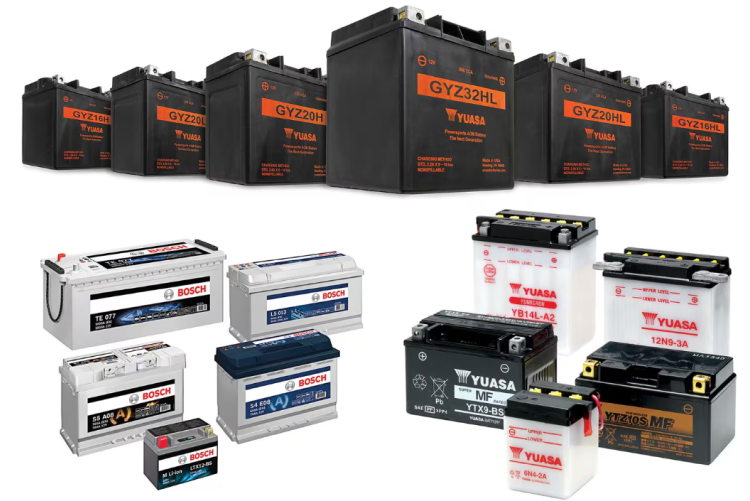
Most motorcycles can use Lead-Acid, AGM (Absorbent Glass Mat), or Lithium-ion batteries, provided the new unit matches the original’s physical dimensions, terminal positions, and voltage requirements. While AGM and Lithium-ion offer performance upgrades over standard lead-acid versions, the battery must fit the factory battery tray and be compatible with the motorcycle’s specific charging system.
Choosing a battery is not always a universal process because bikes have limited space in the battery box. If you are navigating the urban traffic in Burnaby, you might choose to upgrade from a standard lead-acid battery to an AGM model for its vibration resistance and maintenance-free design. While Lithium-ion batteries are a tempting upgrade due to their light weight, some older charging systems do not provide the specific voltage range required to keep them healthy. Before deciding on a new battery, cross-reference the part number of your current battery to ensure any new technology you choose is a safe fit for your motorcycle.
How do you choose the best motorcycle battery type?
Selecting the best motorcycle battery involves matching the battery specifications to your specific motorcycle model and riding environment. You must verify the physical dimensions, terminal orientation, and Cold Cranking Amps (CCA) to ensure reliable starts. High-quality AGM or Lithium-ion batteries are often the best choice for riders who want a balance of longevity and low maintenance.
The climate in British Columbia can be demanding on electrical components. When looking for a replacement, check your owner’s manual for the required CCA rating. This measurement indicates how much power the battery can deliver at 0°C. A higher rating is generally better for those who ride in cooler shoulder-season weather. Always ensure the battery fits snugly in the tray; a loose battery can suffer internal damage from engine vibrations.
What are the signs of a failing motorcycle battery?
Common motorcycle battery replacement signs include a slow or “laboured” engine crank, dimming headlights when idling, and visible physical deformation like bulging or leaking. If you hear a rapid clicking sound when pressing the starter button, it typically indicates the battery has enough voltage to engage the solenoid but not enough to turn the motor.
You can test the health of your battery with a multimeter. A fully charged 12-volt battery should read approximately 12.6 to 12.8 volts when the engine is off. If your reading drops below 12.2 volts, the battery is struggling to hold a charge and may be nearing the end of its life expectancy.
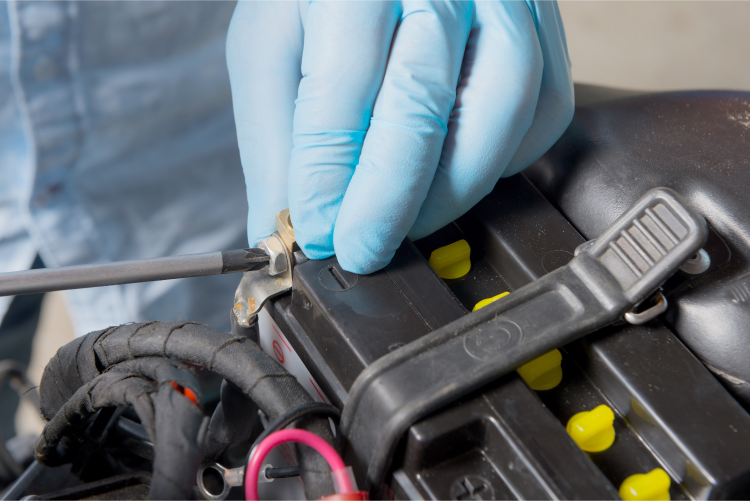
If you notice a white, powdery substance around the terminals, this is corrosion that can lead to poor connectivity. You can usually resolve this buildup by disconnecting the battery and cleaning the terminals with a mixture of baking soda and water and a wire brush to restore a solid electrical connection. Always exercise caution and use eye protection when working with battery components to avoid contact with acidic residue.
How can you extend the life of your motorcycle battery?
To extend motorcycle battery life, keep the terminals clean and ensure the battery is securely mounted to prevent vibration damage. Regularly riding for longer durations allows the motorcycle’s charging system to fully replenish the energy used during the start-up process. Avoiding frequent, very short trips prevents the battery from entering a state of chronic undercharging.
Whether you are enjoying the scenic backroads near Langley or riding through the city, the way you ride affects your battery health. Short trips of ten minutes or less often do not give the alternator enough time to charge the battery back to its optimal level. If your schedule only allows for quick errands, consider a longer ride once a week to help the battery reach a full state of charge. Keeping the connections tight and free of grime ensures that power flows efficiently to the starter and electronics.
How do you store a motorcycle battery for winter?
Winterizing a motorcycle battery requires storing it in a dry, temperature-controlled environment and connecting it to a dedicated motorcycle battery trickle charger. This device monitors the voltage and provides a small charge to offset natural power loss. Keeping the battery in a climate-controlled space prevents the internal components from freezing or degrading during the off-season.
In colder regions, where winter temperatures can dip well below freezing, a battery left in an unheated garage without a charger can lose its ability to hold power permanently. A smart charger is a better investment than a standard manual charger because it automatically shuts off when the battery is full, preventing overcharging. If you cannot keep your bike near a power outlet, removing the battery and storing it on a wooden shelf in a basement or a heated utility room is an effective alternative.
Why is BC motorcycle battery recycling important?
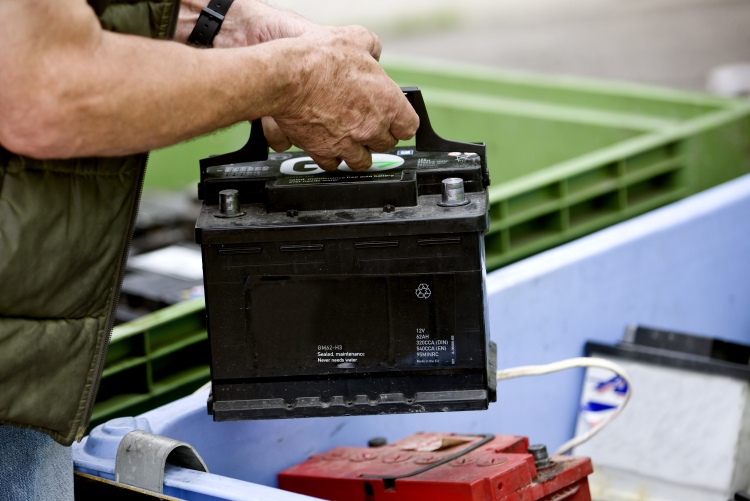
All motorcycle batteries, including Lead-Acid, AGM, and Lithium-ion types, are considered hazardous waste or high-risk materials in British Columbia. While lead and acid are corrosive, lithium batteries pose a significant fire risk if damaged. Provincial regulations require all these batteries to be recycled through stewardship programs to protect the environment and waste-processing staff.
As you prepare for the first ride of the season, take a moment to look at your maintenance logs. If your battery is more than four years old, it is likely time to take it to a designated recycling depot rather than risking a breakdown on the road. Most retailers that sell motorcycle batteries will accept your old unit regardless of its type, as the provincial stewardship plan is designed to make the process convenient for consumers. By participating, you help keep lead, sulfuric acid, and volatile lithium components out of local landfills and ensure these materials are repurposed or neutralized safely.
–
Keeping your motorcycle battery in top shape is one of the simplest ways to ensure your bike is always ready for the road. By understanding the different types of batteries available and staying consistent with winter maintenance, you can avoid the frustration of a dead engine. Regular checks and the right charging equipment will not only save you money but also provide peace of mind every time you head out for a ride.
If you found these maintenance tips helpful, you can explore our other blog posts for more advice, such as Motorcycle Myths Debunked: Separating Fact from Fiction and Motorcycle Safety: Standing Out on the Road.

Related Articles

How Motorcycle Riding Lessons Make Roads & Riders Safer
Ready to take command of your motorcycle journey? Uncover how taking professional rider training transforms the experience and keeps everyone protected.

Riders Guide to Three-Wheel Motorcycle Licensing in BC
Learn how to get a three-wheel motorcycle licence in BC: ICBC knowledge test, Class 6L or 8L learner, MST skills test, road test, and key vehicle rules.

Women’s Motorcycle Gear Guide: Finding the Right Fit
The number of women on two wheels is growing, and with that comes a wider range of gear designed with the female rider in mind. Gone are the days of having to settle for a men's jacket in a smaller size, or a helmet that doesn't quite fit your head shape.
