
Is the Graduated Licensing Program Worth It?
Sitting around the kitchen table planning out driver training after getting your learner’s licence used to be simple: take a Graduated Licensing Program to knock six months off the N stage, then prepare for the Class 5 test. Following the October 2026 changes, new drivers and families are having honest chats about whether that structured path still makes sense. Between heavy school workloads, evening sports practices, and strict ICBC anniversary cutoffs, squeezing in a structured course schedule isn’t the easiest fit for every family calendar.
Every household handles driver training differently depending on busy weekly routines and personal timelines. In this guide, we take a close look at how the province’s licensing updates change things for new drivers, while breaking down the actual expectations of an approved Graduated Licensing Program (GLP). With all the facts, you’ll be able to decide whether a structured course or flexible lessons fit your goals best.
How did ICBC change the Graduated Licensing Program in 2026?
On October 19, 2026, ICBC replaced the Class 5 road test with a driving record assessment for eligible drivers. While the Class 7 road test to move from a Class 7L to a Class 7N remains mandatory, maintaining a clean driving record throughout the Class 7 Novice stage qualifies you for a Class 5 licence with a one-year zero-alcohol and zero-drug restriction.
For decades, getting a full passenger vehicle licence in British Columbia meant passing two separate on-road driving tests. You still have to take and pass the Class 7 road test to exit the learner stage and get your Novice. What changes is the second test: ICBC eliminated the Class 5 exit exam, replacing it with the driving record assessment.
Under this driving record assessment, ICBC reviews your file for driving prohibitions and ticketed infractions. Moving violations, such as excessive speeding tickets or distracted driving convictions, immediately interrupt your progress. If an officer tickets you for an unsafe lane change or distracted driving while carrying your N, your clean driving clock could reset back to day one. Practicing disciplined observation around busy commercial centers like Langley helps you protect that record so you can head straight into an ICBC location to pick up your full licence once your time is served.
What does the GLP course still include?
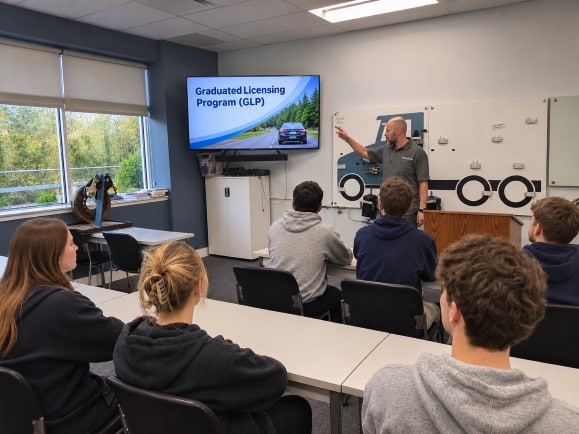
An ICBC-approved Graduated Licensing Program course requires students to complete 17 hours of interactive classroom instruction and 12 hours of on-road lessons while meeting a set competency standard. Students must also finish an interactive online course. Completing the full program during the learner stage earns two high school credits and shaves six months off the novice stage.
The 17 hours of interactive classroom training build practical road knowledge from the ground up. These sessions explore hazard perception, right-of-way rules, winter weather precautions, and collision prevention concepts. Instructors lead real-world discussions on risk management rather than having students memorize generic rules from a booklet.
The practical training requires 12 hours of behind-the-wheel coaching with a licensed Instructor. During these lessons, you start simple on quiet residential streets before gradually gaining momentum in busier traffic zones and on the freeway. Along the way, Instructors coach you through each skill until those habits feel second nature. You must demonstrate appropriately timed mirror checks, full shoulder checks, smooth braking, and safe intersection scans before successfully completing the GLP core competencies.
Students also complete an self-paced online course, focused on what happens after you get your licence. Completely separate from the classroom sessions, this self-paced training covers practical responsibilities like vehicle maintenance and insurance policies. It also reviews how drivers should adapt to changing road conditions and manage fatigue behind the wheel. Finishing all the components included earns high school students two graduation credits.
Does the six-month time reduction still apply?
Yes, the six-month reduction remains active for drivers under age 25 who finish an approved course during their learner stage. Eligible drivers can apply for their full licence after 18 months in the novice stage instead of 24 months. Drivers aged 25 and older follow a separate accelerated licensing timeline.
For younger drivers, shaving six months off the novice stage is a major incentive. Reaching a full Class 5 licence sooner removes passenger limits and lets you drive without displaying the green N sign on your car. To secure this time reduction, you must finish the 17 classroom hours, 12 on-road hours, and online assignments while your Class 7 learner’s licence is still valid. If you take your road test before completing every component of the course, you forfeit the six-month benefit entirely.
Drivers who are 25 years old or older operate under different graduated licensing rules. ICBC provides an accelerated timeline for mature learners: a nine-month learner stage followed by a twelve-month novice stage. Because these drivers already exit their novice period after a single year of clean driving, the six-month course discount cannot be applied to their timeline.
Missing the coursework window before the anniversary of your GLP course start date can catch families off guard. If you miss the one-year timeframe or successfully complete the road test before wrapping up every course component, your timeline stays on the standard 24-month novice path. That strict calendar requirement is one of the main factors families should weigh before registering.
Who benefits most from a GLP course?

Young drivers who want to reduce their Class 7 novice stage by six months gain the most direct timeline benefit from an approved course. Adult drivers who do not qualify for time reductions still gain value from the classroom theory. Ultimately, every driver benefits from learning defensive habits that keep their driving record clean.
First-time drivers often feel overwhelmed by busy roads and fast-changing conditions, and having an Instructor guide you through quiet residential streets before heading onto the freeway makes a big difference in building confidence. In areas like Chilliwack, navigating narrow country lanes alongside tractors and fast-moving traffic requires sharp scanning and patient gap selection. Classroom sessions dig into driving habits to help solidify them, working in conjunction with your on-road lessons.
The classroom instruction also carries real weight for drivers who cannot claim the six-month reduction at all. If you are an adult learner, new to BC roads, or simply not concerned with shaving time off your N, the 17 hours of theory still provide value that in-car practice alone cannot replace. Sitting in class gives you the reasoning behind traffic laws, collision avoidance dynamics, and winter driving judgement. You learn how collisions actually happen and how to spot developing hazards seconds before they become emergencies.
For secondary students, the bonus credits are a welcome extra. Earning two graduation credits while learning a practical life skill gives teens an academic incentive if they have space in their timetable.
Who might not need a GLP course?
Drivers approaching age 25 and students with unpredictable weekly schedules often prefer standalone driving lessons over a structured program. These flexible packages come with no classroom requirements or rigid deadlines. Instead of racing against ICBC calendar cutoffs, you can focus your behind-the-wheel training directly on the specific skills you want to practice.
Taking an approved Graduated Licensing Program can mean juggling classroom sessions, on-road lessons, and an online course, on a firm timeline. You have to complete every requirement before the course anniversary date or your road test, whichever comes first. When school commitments or personal schedule conflicts cause a delay, keeping up with those strict regulatory cutoffs can quickly become stressful.
If you are already 23 or 24 years old, committing to extensive classroom hours makes very little practical sense. By the time you navigate your learner stage and log your novice driving hours, you will likely cross the age-25 threshold and qualify for the streamlined one-year novice timeline automatically. In that situation, paying for classroom sessions gives you no licensing time savings.
For quick learners, purchasing individual lessons or packages gives you the freedom to move at your own pace. If you only need a few sessions to get comfortable handling busy multi-lane intersections in Surrey, you can take your Class 7 road test as soon as you feel ready, rather than spending time on a mandatory curriculum you do not need.
How do you choose between different driver training options?
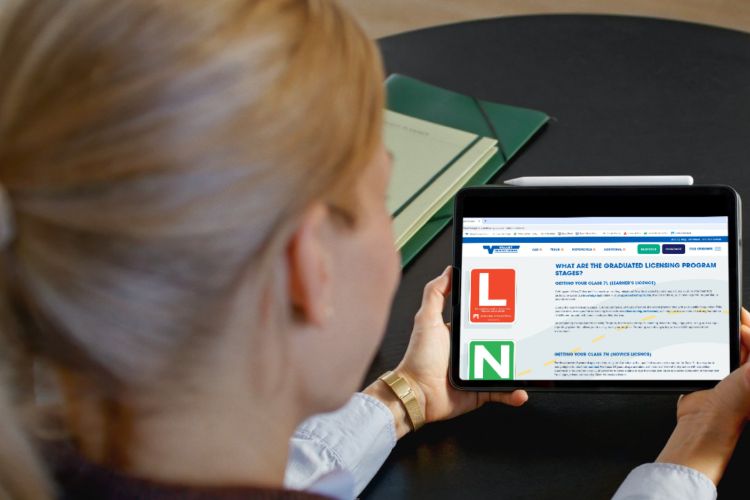
Choosing between an approved Graduated Licensing Course, smaller programs, or individual lessons comes down to your personal schedule and long-term driving goals. Assessing your weekly availability alongside your target test date helps you identify the training package that matches your needs without causing unnecessary stress.
Ask yourself these practical questions before making a decision:
- Are you under age 25, and can you commit to attending 17 hours of classroom instruction on scheduled dates?
- Do you have the weekly availability to fit in your 12 lesson hours plus the recommended practice time between lessons before your anniversary date or road test?
- Could you use two secondary school graduation credits?
- Are you interested in the background knowledge covered in the interactive theory sessions and online course?
Thinking about your future driving goals can also guide your decision. Earning a full Class 5 licence is the necessary first step if you want to move into professional driving. Holding that full licence allows you to apply for a Class 4 Restricted commercial licence, which is the required credential for driving taxis or ride-shares. Upgrading to a Class 4 Unrestricted licence lets you operate community passenger vans and shuttles, opening up flexible ways to earn income behind the wheel. If your immediate career plans involve driving passengers in busy Burnaby, reaching your Class 5 sooner through an approved course might fit your timeline best.
Frequently Asked Questions
Does the GLP course still grant high school credits?
Yes. Secondary school students who successfully complete an approved course earn two graduation credits.
How long do I have to finish the GLP course?
You must complete all 17 hours of interactive classroom instruction, 12 hours of on-road training, and the self-paced online course while meeting required driving competencies during your Class 7 learner stage. Every component must be completed and evaluated before you take your Class 7 road test to qualify for the six-month time reduction.
Do drivers over 25 need to take an approved driving course?
No. Drivers aged 25 and older already qualify for ICBC’s accelerated licensing timeline, which requires only nine months in the learner stage and twelve months in the novice stage. Taking individual driving lessons to prepare for the road test is generally more efficient for mature learners.
Does getting a Class 5 licence reduce your car insurance in BC?
Your insurance premiums with ICBC depend on your driving experience and history rather than your licence class alone. Keeping your driving record clean without tickets or at-fault crashes has the biggest impact on what you pay each year.
–
Choosing between an approved driver training course, a smaller program, or flexible individual lessons comes down to your schedule and your age. While the ICBC changes eliminate the stress of taking a second road test, maintaining safe driving habits is more important than ever because your driving record will be reviewed in order to get a full licence. Valley Driving School offers training programs designed around your lifestyle, with multiple convenient campus locations, flexible lesson packages, and supportive Instructors who help new drivers build lasting confidence behind the wheel.
If you want to see what these licensing updates mean for your daily driving journey, check out our guide on How Do The GLP Changes Affect Your Licence? You can also learn more about the rules attached to your new licence by reading Driver’s Guide to Restrictions and Endorsements on Your BC Licence.

Focused on supporting the people behind the wheel and sharing their knowledge. As Valley Driving School's Instructor Supervisor, I support scheduling and the day-to-day needs of our Car Instructors from Burnaby to Hope. I am proud to bring our collective road wisdom online, where every article I share is verified through my own expertise or reviewed by another subject matter expert.
Related Articles
Class 1 vs Class 3: Which Licence Fits the Job You Want?
You know you want to drive a commercial truck for a living. You just need to figure out which licence gets you there without wasting...
drivers Guide to Restrictions and Endorsements on Your BC Licence
Curious if your BC driver's licence has conditions? Check how restriction codes and special endorsements affect your everyday driving.
What It Takes to Drive a Fire Truck in BC
Pursuing a career in emergency services requires dedication, physical fitness, and strong vehicle handling skills. If you are preparing to become a firefighter, earning a...
