
How to Safely Handle Sun Glare While Driving
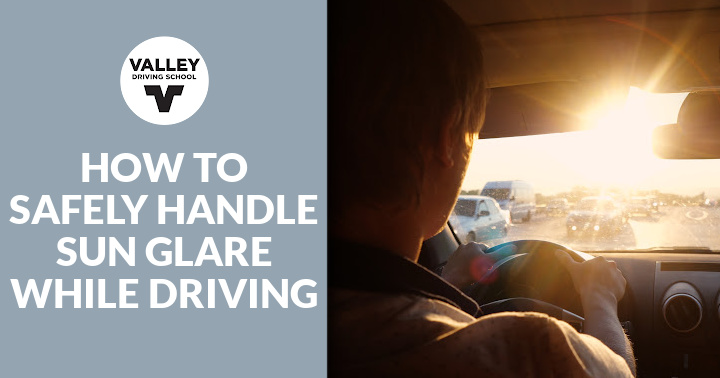
Imagine driving eastbound on the Fraser Highway through Langley during a clear morning, or heading west from Abbotsford late in the afternoon. The sky is clear, traffic is moving smoothly, then suddenly the road bends directly into the path of the sun. In an instant, a blinding flash of white light fills your windshield, completely obscuring the brake lights of the vehicle ahead and making the lane markings vanish. This sudden visual blackout is a daily reality for morning and afternoon commuters, transforming a routine trip into a highly stressful situation in a matter of seconds.
Safely navigating these blinding conditions requires a combination of physical adjustments, proactive vehicle maintenance, and modified defensive habits. Cultivating the right visual strategies and understanding how to protect your space margins will ensure you maintain complete control, even when the horizon vanishes.
How Does Sun Glare Affect Your Driving Safety?
Glare can impact your ability to spot hazards on the road. Sunlight reflecting off surfaces, like pavement or vehicles, magnifies this blinding effect, reducing a driver’s ability to perceive objects or recognize changing traffic patterns. For new drivers who are still building their spatial awareness, this sudden loss of visibility can be disorienting.
The light behaves like a wall of white space, hiding pedestrians waiting at a crosswalk or making it impossible to see if the vehicle ahead has tapped its brakes. On a high-speed route, a small delay in recognition caused by sun glare can dramatically increase your total stopping distance.
What Should You Do When Blinded by the Sun?
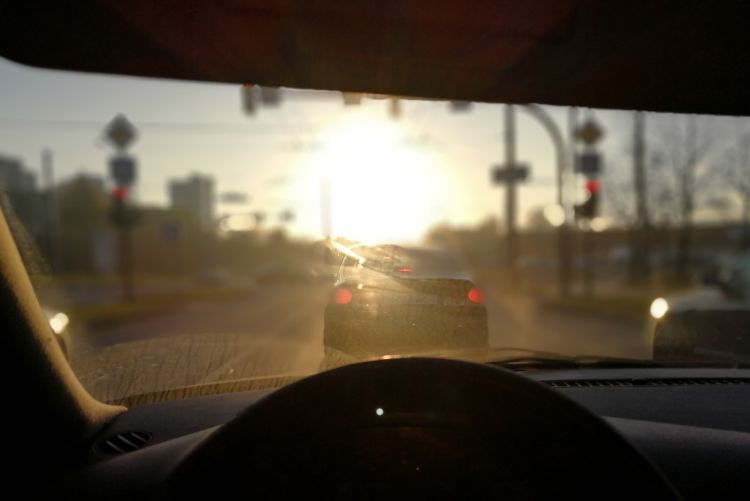
Of course, the best defense is a proactive one. Keep tabs on the weather and the sun’s position relative to your route; if it’s a crystal-clear morning or evening, flip your visor down before you turn a corner or crest a hill. Anticipating the glare ensures you aren’t caught off guard and driving completely blind during those crucial first seconds.
If the sun does catch you by surprise, lower your vehicle sun visor immediately to block direct rays and avoid looking straight into the light source. If the sun is sitting below the visor, drop your gaze slightly and use the lines on the road to navigate. This prevents your vehicle from drifting while your eyes adjust to the high contrast.
When the sun is to your side, most visors can unclip from the center mount and rotate toward the side window to block light entering from the side, while some models feature hidden pocketed extensions that pull out to cover extra window space. Other vehicles include a secondary visor panel underneath that flips down to shield your front view after the main visor is moved to the side glass.
How Do You Adjust Your Driving Behavior for Severe Glare?
To adjust for severe sun glare, drivers should lower speed, increase their following distance, and switch vehicle headlights to the manual position. These quick adjustments preserve your reaction time and make your tail lights visible to motorists travelling behind you.
When the sun is low on the horizon, it reduces visibility for everyone on the road simultaneously. Slowing down gives you the necessary spatial margin to handle unpredictable traffic patterns, as drivers ahead might brake unexpectedly when passing from shade into bright sunlight. Increasing your following distance by an extra 2-4 seconds behind the vehicle ahead gives you the critical room to react to sudden stops. This applies to all drivers, including commercial operators maneuvering large trucks, bus operators, and especially motorcycle riders who are inherently less visible.
Turning your headlights onto the manual position activates your tail lights. This step makes your vehicle more visible to the drivers behind you who are struggling against the glare.
Blinding conditions require extra caution around crosswalks and intersections, especially on busy transit routes through Surrey or Coquitlam. Pedestrians often look right at your vehicle and step into traffic, assuming that because they can see your car, you can see them. They can be unaware that the blinding light has hidden them from your view.
How Does a Dirty or Scratched Windshield Make Glare Worse?

Dust, streaks, rock chips, and cracks scatter sunlight directly across your field of view, turning a minor inconvenience into an opaque sheet of light. A dirty or damaged windshield amplifies the glare by catching the light rays and refracting them in multiple directions simultaneously.
Many drivers clean the outside of their glass but neglect the film of dust and grease that builds up on the inside from the dashboard materials and ventilation systems. When bright sunlight strikes this interior film, it creates a hazy visual distortion that is nearly impossible to see through.
Keeping both sides of the glass spotless with a regular microfiber cloth and cleaner is a simple preventative habit. Vehicle glass damage like small chips and cracks should be repaired as soon as possible because sunlight hitting these spots creates sharp reflections that can temporarily blind you.
New drivers should note that ICBC road test examiners can turn you away and cancel your session if your windshield has chips or cracks that obstruct the view. To avoid this risk, many students choose to book a dedicated road test preparation and vehicle rental package from a professional driving school, ensuring they can complete the road test in a fully compliant car without any cause for ICBC to cancel.
What Equipment and Accessories Help Reduce Sun Glare?
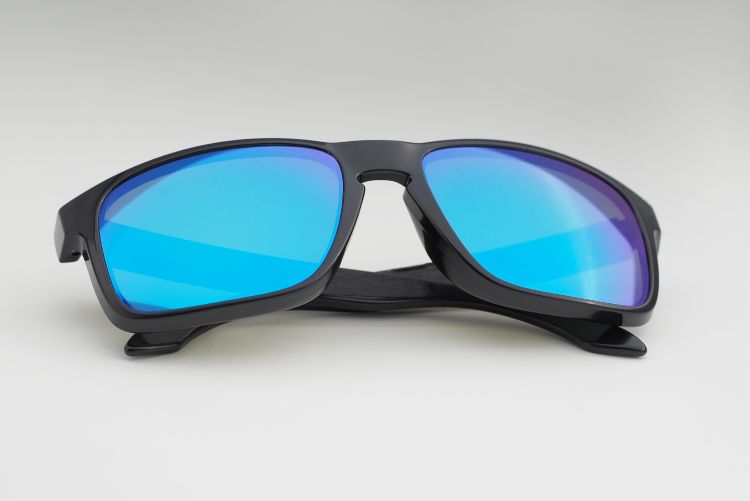
Polarized sunglasses, interior visors, and fixed ultraviolet window treatments are the most effective tools for reducing glare. Unlike standard tinted sunglasses that only darken your vision, polarized lenses specifically filter out the bright reflective light bouncing off surfaces like pavement and metallic vehicle parts.
Keeping a dedicated pair of sunglasses in your center console is an excellent habit for all motorists, especially seniors who may require more time for their eyes to adjust to sudden light transitions.
Drivers often consider window tinting to manage solar reflection, but make sure before you do so that you know British Columbia regulations regarding aftermarket modifications. Provincial laws prohibit aftermarket window film on the windshield and front side glass, allowing only a clear, non-reflective tint strip along the top 75 millimeters of the windshield. Dark films are legal on rear passenger windows and back glass. However, keeping front glass un-tinted is necessary to ensure clear sightlines during changing light conditions.
Avoid using rear passenger window shades, mesh screens, or other removable objects to block the sun in the front seats. While these products are helpful for shielding passengers in the back rows, placing them on your front side windows or windshield obstructs your mirrors and creates dangerous blind spots, and it is illegal.
When Is It Best to Pull Over and Wait?
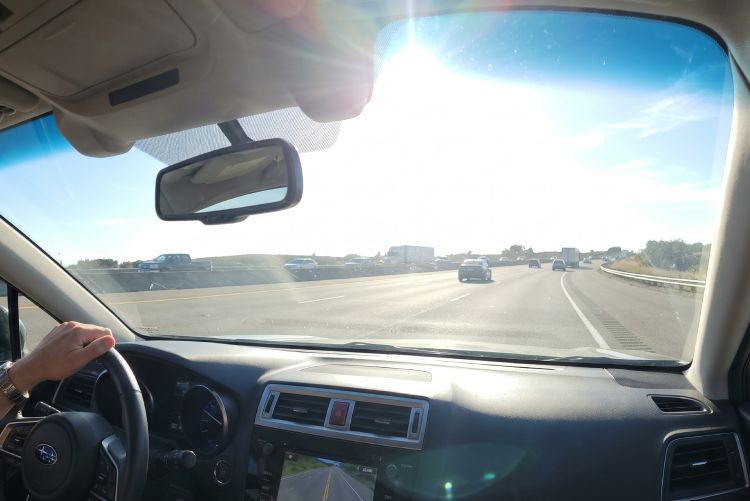
If you are not positive that you can see properly for any reason, whether it is glare, fog, snow, or rain, you should pull over. Accessories and driving adjustments are helpful, but they cannot solve every visibility issue. Losing a clear view of the road ahead means it is no longer safe to operate your vehicle.
The safest choice is to leave the route entirely: look for an exit ramp, designated parking lot, a gas station, or a quiet side street to pull into. Avoid pulling off onto a narrow shoulder unless it is an absolute emergency. Blinded drivers behind you might drift past the fog line and strike a stopped vehicle. Taking even just a ten-minute break in a safe location allows the sun to move past the main viewing angle, giving you a clean view of the road for the rest of your trip.
–
Managing sun glare is an active part of hazard perception that requires proper preparation, regular vehicle maintenance, and smart on-the-road decisions. By keeping your windshield spotless, investing in a reliable pair of polarized sunglasses, and increasing your following distance, you can safely navigate blinding transit corridors during peak morning and afternoon hours. Patience is a fundamental element of safe driving, and pulling over to wait out severe conditions is a responsible choice.
If you want to continue improving your defensive driving skills and visual habits, explore our other comprehensive resources. We invite you to read Safe Driving Tips for Seniors to learn more about navigating changing vision requirements, or check out our Driver’s Guide to Hazard Perception to strengthen your ability to spot and manage road hazards before they become emergencies.

Focused on supporting the people behind the wheel and sharing their knowledge. As Valley Driving School's Instructor Supervisor, I support scheduling and the day-to-day needs of our Car Instructors from Burnaby to Hope, and am proud to bring our collective road wisdom online.
Related Articles
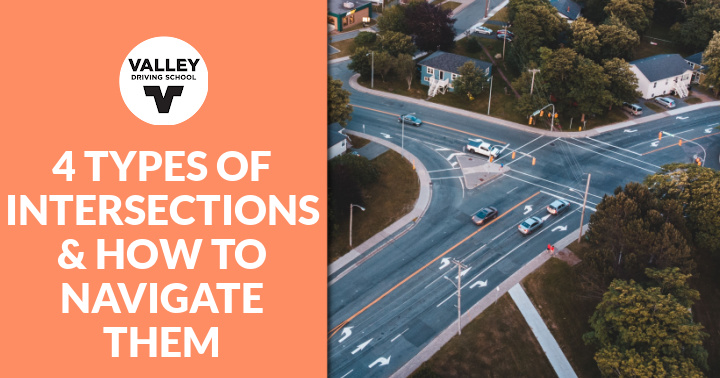
4 Types of Intersections & How to Navigate Them
Intersections are an important part of driving no matter where you are, but do you know all the different types and the rules for each?
How Car Driving Lessons Make Roads & Drivers Safer
Looking to build lasting confidence behind the wheel? Discover how car driving lessons sharpen observation skills and make BC roads safer for everyone.
Upcoming Changes to the Graduated Licensing Process
ICBC’s Graduated Licensing Program is being updated for 2026: skip the Class 5 road test and complete a 12-month safety period. Learn more about the timelines and next steps.
