
Sharing the Road with Emergency Vehicles
Emergency services are instrumental to healthy and safe communities. As a driver, we will encounter the flashing lights or sirens of an emergency vehicle during our commute. The flashing lights, loud sirens, and enhanced stress and adrenaline of an emergency situation may cause confusion, so knowing the rules and regulations when encountering emergency vehicles, will ensure everyone’s safety.
What is an Emergency Vehicle?
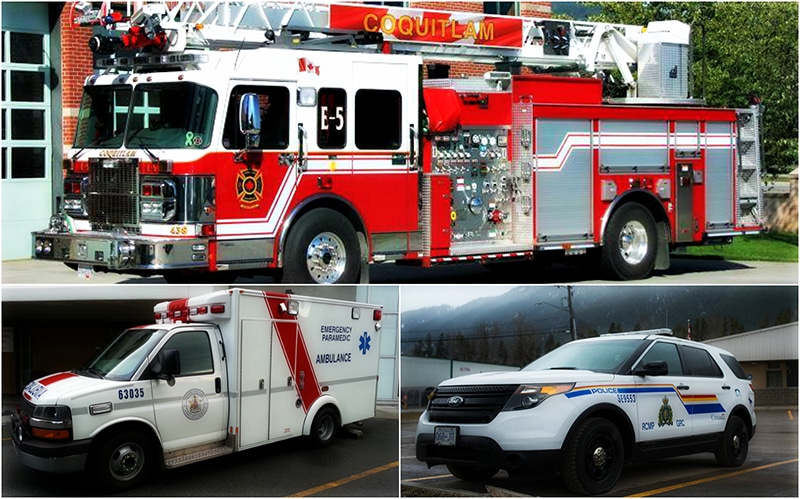
Emergency vehicles are any vehicle that responds to or engages in, an emergency situation, typically fire, ambulance and police. They may use sirens and flashing lights as a way to make their urgent presence known to other drivers and pedestrians.
WHAT IS AN OFFICIAL VEHICLE?
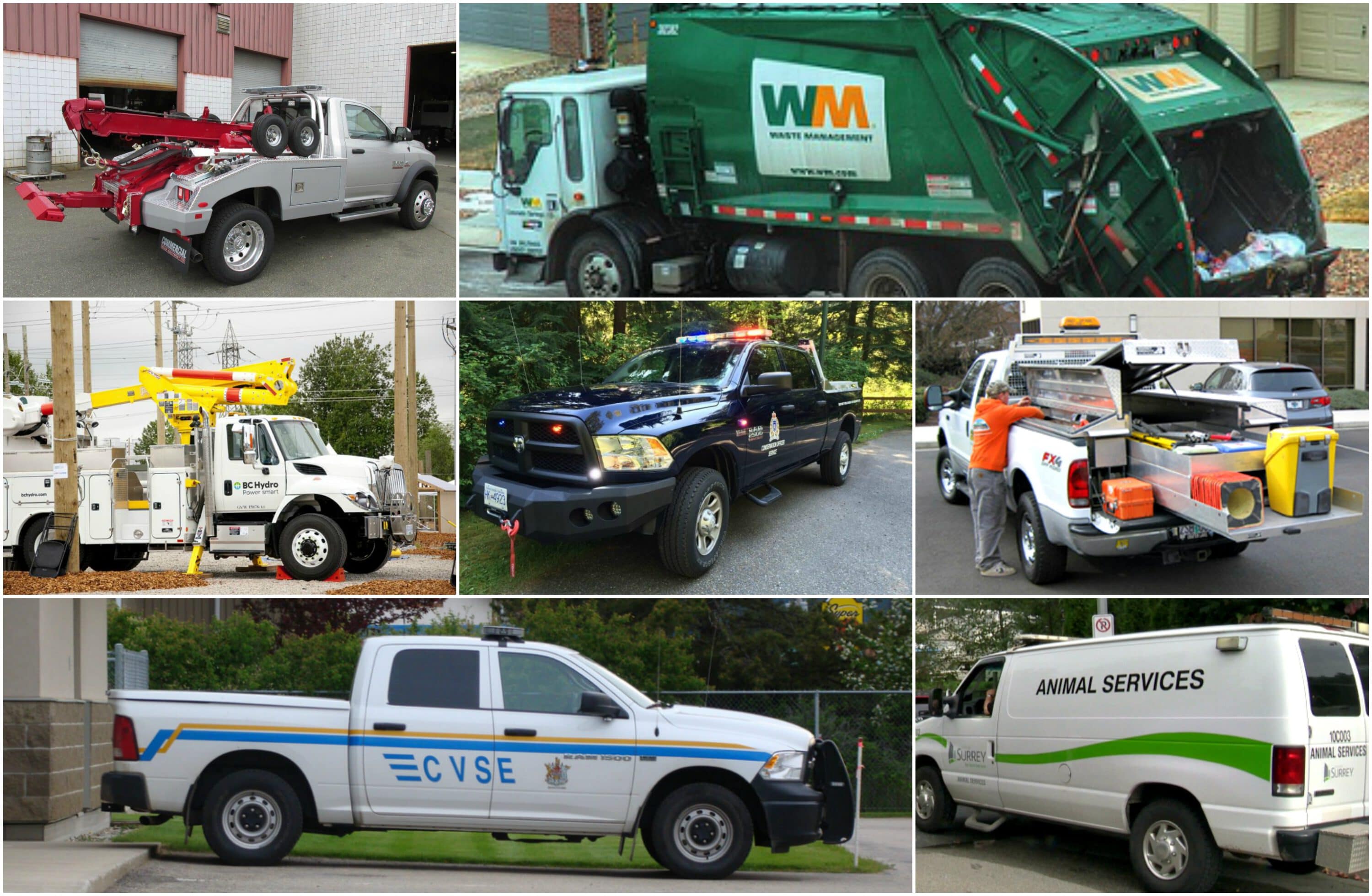
Official vehicles include tow truck operators, commercial vehicle inspectors, conservation officers, maintenance and utility workers, land surveyors, animal control, and garbage collectors.
The Rules
The British Columbia Motor Vehicle Act states in Section 177:
“On the immediate approach of an emergency vehicle giving an audible signal by a bell, siren or exhaust whistle, and showing a visible flashing red light, except when otherwise directed by a peace officer, a driver must yield the right of way, and immediately drive to a position parallel to and as close as possible to the nearest edge or curb of the roadway, clear of an intersection, and stop and remain in that position until the emergency vehicle has passed.”
Emergency vehicles with an audible (siren) or visual (flashing lights) always have the right-of-way. All traffic traveling in either direction must stop. There is one exception: on a divided highway, if the emergency vehicle is approaching on the other side of the median, you may not need to stop if it is impossible for the emergency vehicle to move onto your side of the highway.
Allow emergency vehicles adequate space by adjusting your following distance. When following a fire truck, drivers must stay back at least 150 meters. Do not stop in an intersection. Clear a path for the emergency vehicle by pulling over and, if necessary, turning a corner to get out of the way. Think ahead to create a safe path for the emergency vehicle trying to get through.
Drivers must remain stopped until the emergency vehicle has safely and fully passed by – it does not matter which direction they are coming from. Different road environments also mean different responses for drivers:
- All two-way, two-lane highways – the nearest edge where pulling over safely is most applicable would be the driver’s right on the shoulder of the road.
- On divided highways – if you occupy the fast/left lane, the nearest and safest space to pull over is the driver’s left, whereas merging traffic or those traveling in the slow/right lanes should clear a path for emergency vehicles by pulling off to the driver’s right.
Emergency vehicles often travel and respond to calls in groups, and if you see or hear one – you may encounter more. Always shoulder check, mirror check, signal, and ensure it is safe and there are no more emergency vehicles before pulling back into traffic.
Slow Down, Move Over
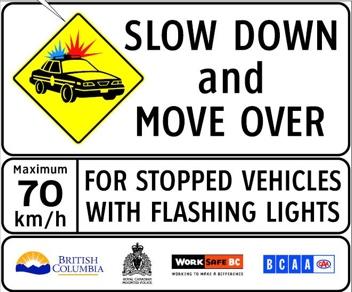 On June 1st, 2009, the province of British Columbia introduced new legislation known as the Slow Down, Move Over law as a way to ensure emergency workers have a safe workplace during an emergency call. The law requires motorists to slow down to 70 km/h if the posted speed limit is 80 km/h or more, and to slow to 40 km/h if the posted speed limit is less than 80 km/h. These are the speeds to follow unless otherwise posted. You may also find that going slower is the right thing to do for the specific situation. Moving over means drivers are required to move into an adjacent lane or when safe to do so. This allows the emergency vehicles and personnel the space required to safely work and respond to the emergency.
—
Listen for sirens and watch for flashing lights, give advancing emergency service vehicles the right of way, and give employees room to do their job safely. Following the correct procedures when sharing the road with emergency vehicles will ensure everyone gets to their destination safely and receives the emergency help they require.
Related Articles
Sharing the Road with Farm Vehicles
Enjoying a peaceful drive through our local farm lands? Discover the farm vehicle safety protocols and passing rules that keep BC’s rural roads safe for everyone.
Sharing the Road with New Drivers
Learn how to safely share the road with new drivers. Our guide offers practical tips to help experienced drivers foster a supportive environment for those just starting out
Sharing the Road with Public Transit
Learn how to safely share the road with public transit. Our guide offers practical tips for drivers on navigating interactions with buses and other transit vehicles effectively.
