
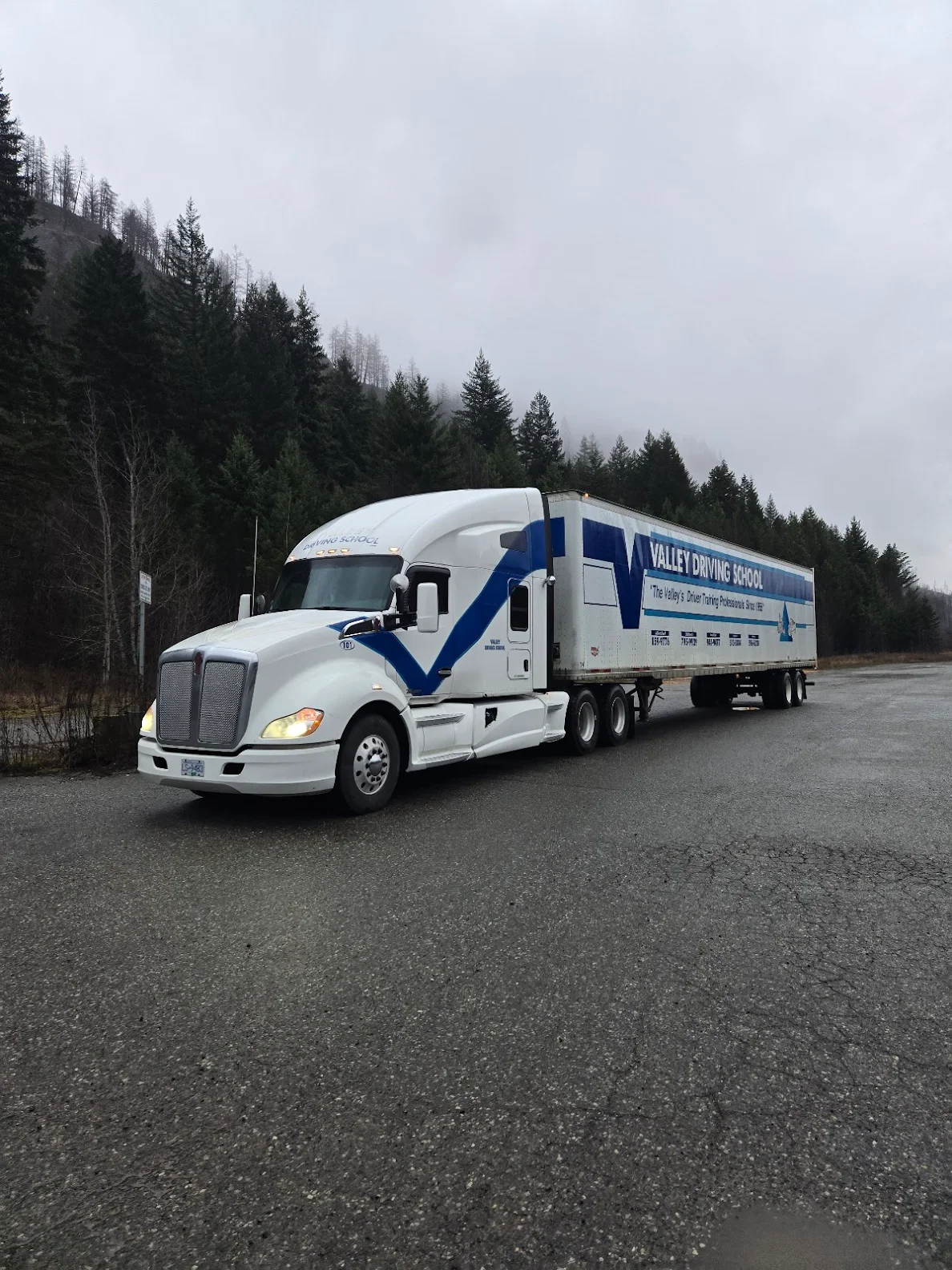
Truck Training
Right Turns in a Tractor Trailer e-Learning Course
What is the Right-Hand Turns in a Tractor-Trailer e-learning course?
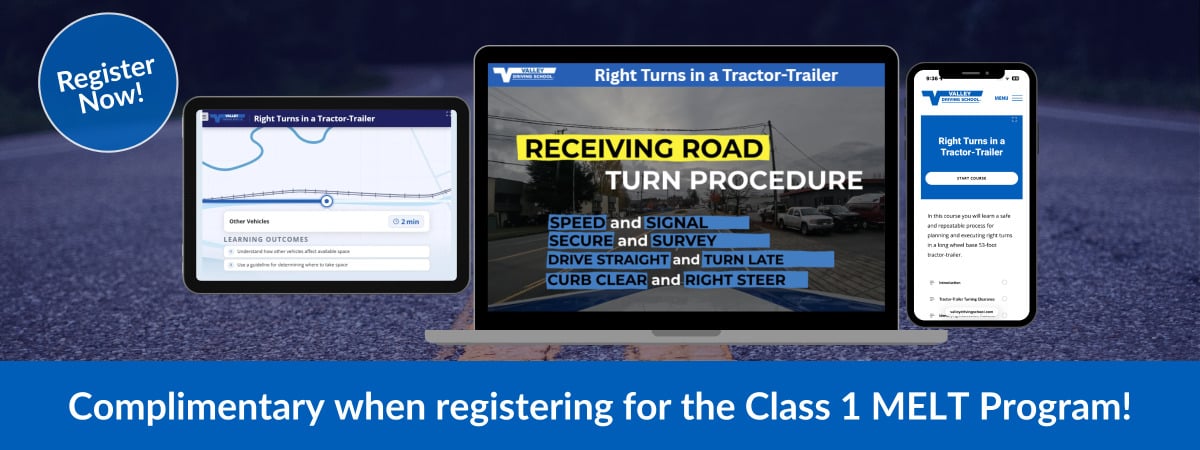
Get behind the wheel of a tractor-trailer without ever leaving your seat with the Right-Hand Turns in a Tractor-Trailer e-learning course. Built for Class 1 drivers and students working through their commercial training, this course tackles one of the most demanding maneuvers on the road: the right-hand turn.
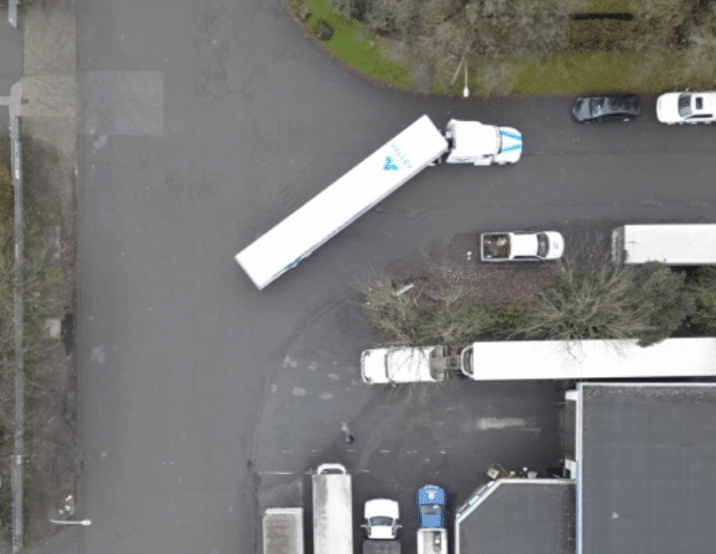
A tractor-trailer needs far more space to turn than a passenger vehicle, and every intersection brings its own mix of features that can either provide or restrict space for a commercial driver. This online course focuses on real intersection layouts, hazard identification, off-tracking and tractor-trailer turning radius, and how other road users impact the space available for professional drivers. Students will come away with a safe, repeatable right-turn procedure they can apply across both receiving and departing roads, no matter how an intersection is laid out.
Program Price $39
Or FREE when registering for the Class 1 MELT Program
What are the primary focus areas?
- Tractor-trailer turning clearance and off-tracking
- Identifying the intersection features that affect a right turn
- How other vehicles restrict a tractor-trailer’s turning space
- A safe, repeatable right-turn procedure for any intersection layout
- Review questions to confirm what you’ve learned
Why does the right turn deserve its own course?
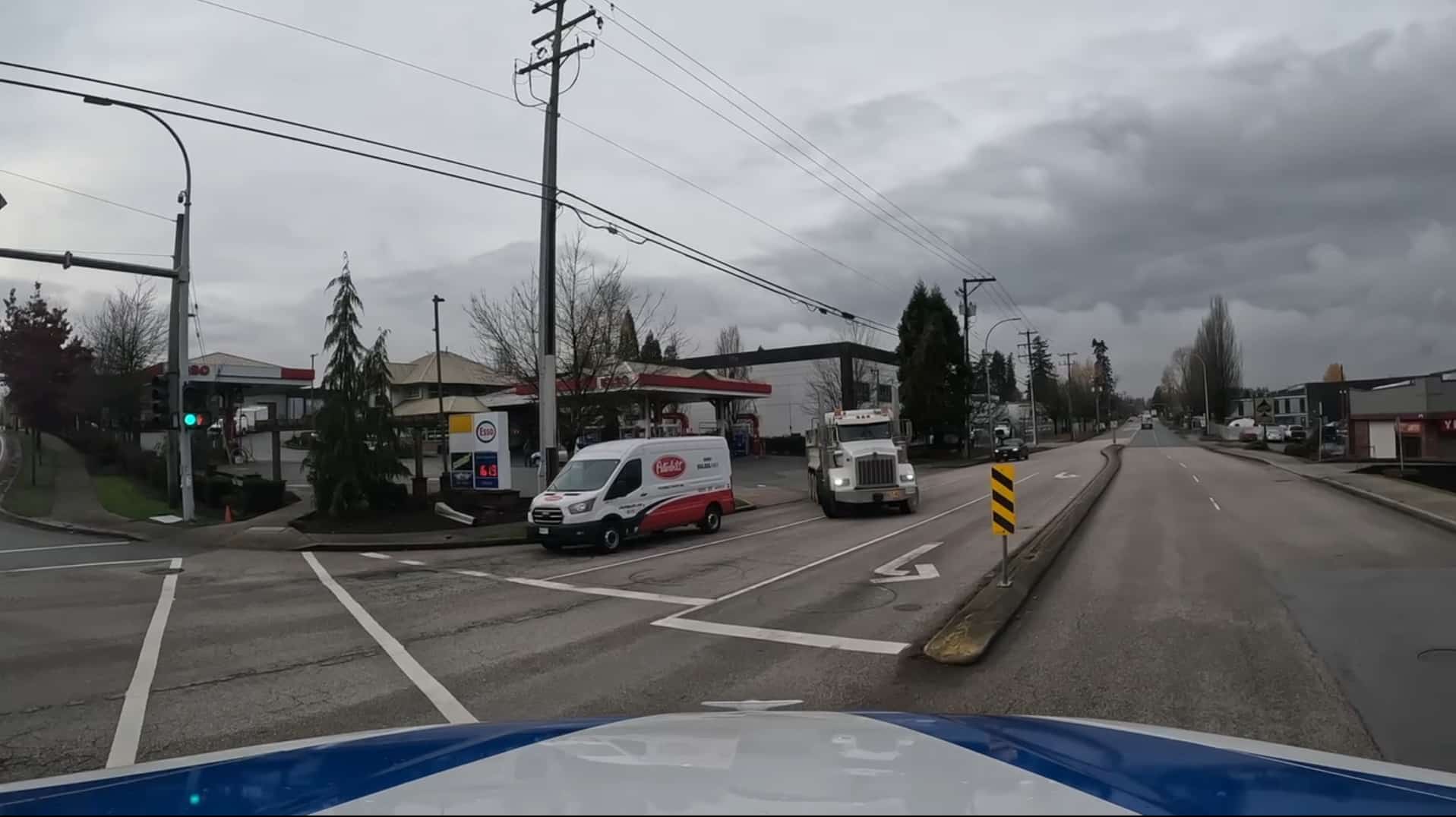
Most drivers can picture a car making a right turn without a second thought. A tractor-trailer is a different story. Between the length of the trailer, the trailer’s off-tracking path, and navigating through a variety of intersection types, a maneuver that looks routine from the outside asks a lot of the driver behind the wheel, especially on busy Fraser Valley routes like the Lougheed Highway or through the intersections along Cliveden Avenue in Delta. Parked cars, cyclists, and pedestrians are often all competing for the same space that a tractor-trailer needs to swing through on its way to the final destination.
This course walks students through how to read an intersection before they ever start to turn. From there, students practice applying a safe turn path and learn to plan ahead for where they’ll take space, rather than reacting once they’re already committed to the turn.
For drivers who want to go further, our blog on sharing the road with tractor-trailers breaks down how other road users perceive these turns from the outside; useful context for understanding why positioning and signalling early matter as much as the turn itself.
Who is this course for?
This e-learning module is designed to support students undergoing Class 1 MELT training, and it works just as well as a focused refresher for licensed commercial drivers. It’s a strong fit for anyone who wants a clearer mental model of tractor-trailer turning radius and intersection reading before their next road test or route. That includes drivers working through a recent near miss or incident at an intersection and looking to rebuild their confidence behind the wheel, newly licensed drivers still getting comfortable with how a full-size unit behaves through a turn, and experienced drivers returning to trucking after time away from the industry who want to knock the rust off before their first route back.
Whatever brought you to the course, the goal is the same: build a clear, repeatable understanding of how a tractor-trailer turns before you’re relying on that understanding in live traffic. Working through the fundamentals in a low-pressure, self-paced setting: how much space a trailer really needs, how to read an intersection before committing to the turn, and how other vehicles can eat into that space, gives every one of these drivers a safer, more confident starting point once they’re back applying it out on the road.
Manuals and handouts are included with tuition.
